
Online price ranges of $3 to $12 per square foot are too broad to help you budget. Actual epoxy flooring cost depends on the condition of your concrete, the coating system you choose, and the complexity of the project. The biggest cost driver is surface preparation, which causes 73% of coating failures when done incorrectly.
Proper prep is what determines whether your floor lasts 15 years or fails in 18 months. This guide breaks down epoxy flooring costs by floor condition, system type, project size, and industry requirements so you can make an informed decision.
How much is Epoxy Flooring Cost Per Square Foot
Epoxy flooring prices depend on concrete condition, coating type, and project complexity. Here is what to expect in 2025:
DIY Epoxy Kits: $1 to $3 per sq. ft.
A 2-car kit costs $200 to $600, plus tools, cleaners, and grinder rental ($75–$150/day).
Professional Residential Installation: $4 to $8 per sq. ft.
A 400 sq ft garage typically costs $1,600 to $3,200, including grinding, crack repair, primer, base coat, flakes, and clear topcoat.
Premium Residential Systems: $8 to $12 per sq. ft.
Metallic epoxy and decorative quartz offer enhanced durability, UV protection, and 5–10 year warranties.
Commercial & Industrial Floors: $7 to $15+ per sq. ft.
Specialized facilities (food processing, pharma, cleanrooms) may reach $18 to $20 per sq ft due to regulatory and performance standards.
Heavy-Duty Urethane Cement: $12 to $18 per sq. ft.
Urethane cement is ideal for food production and commercial kitchens. Handles 180°F washdowns and lasts 15–20+ years.
What Drives Your Final Price
Your epoxy flooring cost depends on three factors:
- Floor condition
- Coating system type
- Project size/complexity
| Condition | Price Range | Notes |
| Good | $4 to $6 per sq ft | Minor prep only |
| Moderate | $6 to $8 per sq ft | Crack filling, shot blasting, moisture mitigation |
| Poor | $8 to $12+ per sq ft | Coating removal, moisture barriers, major repairs |
Coating System Types and Costs
Standard Epoxy
- Cost: $4 to $6 per sq ft
- Best for: Residential garages and light-duty areas
- What you get:
- 100% solids epoxy
- Good chemical resistance
- Durable surface for vehicles and foot traffic
- Lifespan: 8 to 12 years
Fiber-Reinforced Epoxy
- Cost: $7 to $10 per sq ft
- Best for: Warehouses, manufacturing, airplane hangars
- What you get:
- Reinforced with fiberglass for added strength
- Handles heavy impact and frequent temperature changes
- More resistant to cracking than standard epoxy
Urethane Cement
- Cost: $12 to $18 per sq ft
- Best for: Food processing, dairy plants, commercial kitchens, breweries
- What you get:
- Extremely durable, moisture-tolerant hybrid system
- Withstands hot washdowns up to 180°F
- Superior chemical and thermal shock resistance
- Lifespan: 15 to 20+ years
Decorative Add-Ons
- Cost: Add $2 to $4 per sq ft
- Options include:
- Metallic pigments (3D effect)
- Quartz broadcast for texture and slip resistance
- Extra UV protection
- Custom colors and blends
Project Size Pricing Tiers
| Project Size | Price Range |
| Under 500 sq ft | $8 to $12 per sq ft |
| 500 to 2,000 sq ft | $5 to $8 per sq ft |
| 2,000 to 10,000 sq ft | $4 to $7 per sq ft |
| Over 10,000 sq ft | $3.50 to $6 per sq ft |
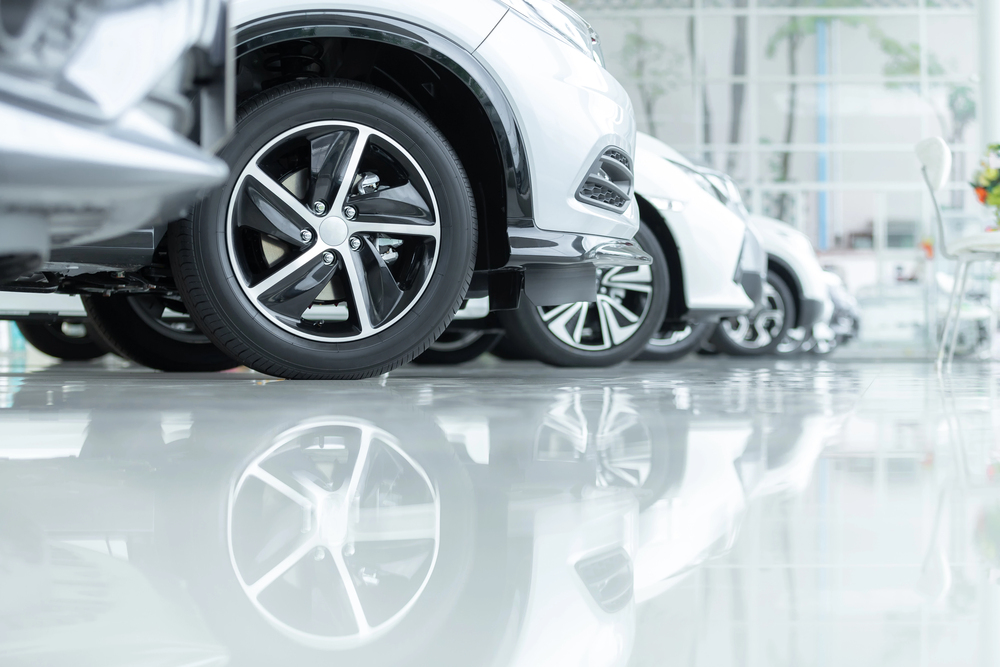
Garage Epoxy Flooring Costs
2-Car Garage (400–500 sq ft)
- DIY: $350 to $600, 20–24 hours of work, 2–5 year lifespan
- Professional Standard: $1,800 to $3,200, full prep, flakes, topcoat; 8–12 years
- Professional Premium: $3,200 to $5,000, metallic/quartz, thicker build; 12–18+ years
3-Car Garage (600–750 sq ft)
- DIY: $500 to $900
- Professional: $2,800 to $7,500 depending on system level
500–1,000 Sq Ft Projects
- 500 sq ft professional: $2,500 to $4,000
- 1,000 sq ft professional: $5,000 to $8,000
Coverage Reality Check:
Actual spread rates vary by slab condition:
- Smooth: 200–250 sq ft/gal
- Average: 150–200 sq ft/gal
- Porous: 100–150 sq ft/gal
Always order 15–20% extra material.
Is Epoxy Cheaper Than Tile?
Yes. Epoxy flooring is typically 40 to 60 percent less expensive than tile.
Cost Comparison for a 500 sq ft Garage
- Professional Epoxy: $2,500 to $4,000
- Ceramic Tile: $4,000 to $7,500
- Total Savings with Epoxy: $1,500 to $3,500
Epoxy costs less because:
- Installation is faster (1 to 3 days vs 5 to 7 days for tile)
- Material costs are lower
- Labor requirements are lower
10-Year Cost Comparison (500 sq ft)
| Flooring Type | Upfront Cost | Annual Maintenance | 10-Year Total |
| Epoxy | $3,000 | $50 | $3,500 |
| Tile | $5,000 | $100 | $6,000 |
| VCT (Vinyl Composition Tile) | $2,000 | $300 | $5,000 |
Even though VCT has a lower upfront cost, epoxy becomes the lowest-cost option over time due to minimal maintenance and longer life expectancy.
When epoxy outperforms tile:
- Food processing facilities: Seamless surface prevents bacterial growth
- Chemical exposure areas: Superior resistance to acids and solvents
- Thermal shock environments: Withstands hot washdowns that destroy tile grout
- High-impact zones: Flexes under impact while tile cracks
Commercial and Industrial Epoxy Flooring Costs
Different industries have different performance requirements, and pricing reflects that. Below is a breakdown of what each type of facility typically pays and why.
Light Commercial: $6 to $10 per sq ft
Retail, offices, and schools; moderate durability and decorative options.
Food Processing & Dairy: $10 to $18 per sq ft
Urethane cement systems offer thermal shock resistance, antimicrobial properties, and seamless coving.
Pharmaceutical & Healthcare: $12 to $20 per sq ft
Cleanroom-grade, static-dissipative, nonporous, low-VOC.
Warehouses & Distribution: $7 to $12 per sq ft
Forklift-rated, abrasion-resistant, and fast return-to-service (24–48 hours).
The Downtime Factor
Sometimes cure time costs more than the floor itself.
Example: Dairy Processing Plant
- Production value: $75,000/day
- Standard epoxy (7-day cure): $565,000 true cost
- Urethane cement (48-hour cure): $240,000 true cost
Savings: $325,000 simply by choosing a faster-curing system.
The quicker curing time means the plant gets back to full production sooner, which dramatically cuts downtime costs.
How We Reduce Downtime
We understand how mission-critical uptime is for production facilities. That’s why we offer:
- Night and weekend installations
- Rapid-cure epoxy and urethane systems
- Strategic scheduling around production hours
This ensures your operations stay online with minimal disruption.
Warning Signs in Epoxy Flooring Quotes
Not all quotes are created equal. Here are the red flags to watch out for and the questions you should ask before hiring any epoxy contractor.
Low Quotes (Under $3/sq ft)
Be cautious if you see:
- No surface prep listed
- “One coat is enough.”
- No moisture testing
- Immediate availability
High Quotes (Over $15/sq ft residential)
Red flags:
- No itemized scope
- One-day-only pricing pressure
- No written warranty
Critical Questions to Ask
- What prep will you perform?
- Good: Diamond grinding to CSP-2
- Bad: “We’ll clean it really well.”
- How will you test for moisture?
- Good: Calcium chloride test (ASTM F1869)
- Bad: Plastic sheet test
- What is the mil thickness?
- Good: 18–25+ mils
- Bad: “Standard thickness.”
- What does your warranty cover?
- Good: Written and specific
- Bad: Verbal only
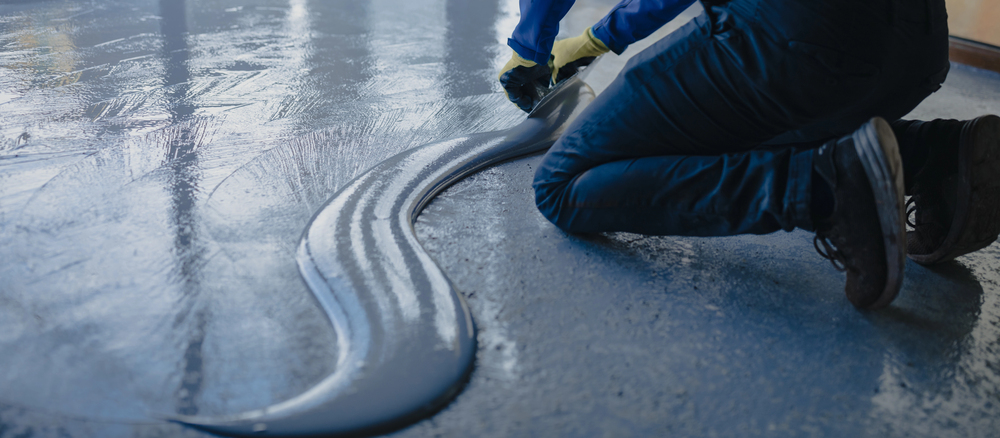
DIY vs. Professional Epoxy Installation
Installing epoxy yourself can save money upfront, but it comes with tradeoffs in durability, equipment, time, and the risk of failure. Here is what to expect from both options.
DIY (400 sq ft)
- Cost: $830–$1,400
- Time: 20–28 hours
- Lifespan: 3–5 years
- Limitations: No moisture testing, weaker prep, mixing errors
Professional
- Cost: $2,000–$3,200
- Time: 2–3 days
- Lifespan: 10–15 years
- Benefits: Industrial grinders, moisture testing, precise mixing
Cost of a Failed DIY Job
- Removal: $800–$1,200
- Repairs: $400–$800
- New install: $2,500–$3,500
Total: $4,700–$6,500 vs. $2,500–$3,500 done right initially
DIY vs. Professional Epoxy Flooring: Comparison Table
| Category | DIY Installation | Professional Installation |
| Cost (400 sq ft) | $830–$1,400 | $2,000–$3,200 |
| Time Required | 20–28 hours over 6–7 days | 2–3 days total |
| Skill Level Needed | High | None |
| Equipment | Basic tools + grinder rental | Industrial grinders, shot blasters, moisture meters |
| Surface Preparation Quality | Limited | Industry-standard (CSP-2 profile) |
| Moisture Testing | Rarely done | Included |
| Mixing Accuracy | Manual (prone to error) | Precise, controlled |
| Environmental Control | Difficult | Professionally managed |
| Expected Lifespan | 3–5 years | 10–15 years |
| Risk of Failure | High | Low |
| Fixing a Failed Job | $4,700–$6,500 | Not applicable |
| Best For | Budget projects, like-new concrete | Long-term performance, damaged concrete, commercial and residential upgrades |
Request a Site Evaluation
At Peckham Coatings, we provide technical consultations, not sales pitches. Our goal is helping you understand which system fits your needs and budget.
You Can Expect:
- Site assessment of your specific conditions
- Testing (moisture and substrate as needed)
- Discussion of operational requirements
- Honest recommendation with performance expectations
- Options at different price points
- Transparent, itemized pricing
Our team is here to help. Reach out today; we’re ready to talk through your goals, answer questions, and provide a solution that fits your timeline and budget.
Frequently Asked Questions
How much does it cost to epoxy 500 sq ft?
Professional: $2,500–$4,000
DIY: $500–$1,000
How much epoxy for 1,000 sq ft?
5–7 gallons total; order 15–20% extra for porosity.
Is epoxy cheaper than tile?
Yes, epoxy is 40–60% less.
How long does epoxy last?
DIY 2–5 yrs | Residential 8–12 yrs | Premium 12–18 yrs | Industrial 8–15 yrs | Urethane cement 15–20+ yrs
What affects cost most?
Floor condition, system type, and project size.
Can you apply epoxy over existing flooring?
Yes, if it’s bare concrete or well-adhered epoxy.
No, tile, vinyl, or failed coatings (removal = +$2–$3/sq ft).
Is epoxy worth it?
Yes, long lifespan, low maintenance, strong ROI, and improved safety.
How do I maintain it?
Daily sweep, weekly mop, monthly deep clean. Avoid abrasives and harsh chemicals.