
In 2024, the Bureau of Labor Statistics recorded 479,480 days-away-from-work cases involving slips, trips, and falls, along with 844 fatal work injuries from the same causes. OSHA considers falls among the leading causes of serious workplace injury and death across general industry.
Most prevention guidance focuses on housekeeping, signage, and footwear. Those matter. But in industrial facilities, many OSHA slip, trip, and fall hazards are built into the floor itself. This guide covers the standards that apply, the conditions that drive incidents, and where safer industrial flooring solutions make a lasting difference.
What OSHA Means by Slip, Trip, and Fall Hazards
These three terms are often grouped together, but they describe different events with different causes and different prevention strategies.
A slip happens when there isn’t enough traction between a person’s foot and the walking surface. Wet floors, oily residue, smooth or polished coatings, and poor drainage are the most common drivers.
A trip happens when a person’s foot catches on something. This may result from an uneven transition, a curled mat edge, a cord across a walkway, broken concrete, or a pallet staged on a pedestrian path.
A fall is usually the result of a slip or trip that the person can’t recover from. In industrial settings, falls happen on the same level and from elevation, and the consequences scale significantly with height and surface conditions below.
OSHA’s walking-working surface rules apply to both same-level hazards and, in a broader safety context, falls to lower levels. In warehouses, manufacturing plants, food processing facilities, and commercial buildings, moving traffic, wet processes, and constant surface wear make all three hazard types a daily reality.
The OSHA Standard for General Slip and Fall Hazards
29 CFR 1910.22 is the primary standard governing walking-working surfaces in general industry. In plain terms, it requires that floors and other walking-working surfaces be:
- Clean, orderly, and sanitary
- Dry to the extent feasible, with proper drainage and dry standing areas where wet processes occur
- Free of hazards including leaks, spills, corrosion, loose boards, and surface failure
- Capable of supporting the maximum intended load
- Regularly inspected, maintained, and repaired before returning to service
29 CFR 1910.176 adds requirements specific to material handling areas:
- Safe clearances must be maintained where mechanical equipment operates
- Aisles and passageways must be kept clear and in good repair
- Permanent aisles and passageways must be appropriately marked
- Storage areas must be free from tripping hazards
- Open pits, tanks, vats, and ditches must be guarded
Together, these two standards cover most of the floor-level conditions that generate citations in general industry. OSHA doesn’t cite intent. It cites conditions.
Related reading: What Are OSHA Violations? A Simple Guide | OSHA Floor Safety: How Floor Marking Colors Improve Workplace Safety
Common Causes of OSHA Slips, Trips, and Falls in Industrial Facilities
Common Causes of Slips
- Water, oil, grease, or chemical residue on the floor surface
- Powder, dust, grain, debris, or organic material from processing
- Smooth, worn, or polished floor coatings with insufficient traction
- Poor drainage or standing water in wet-process zones
- Transitions between different floor types or materials
- Wet metal dock plates, ramps, and outdoor entry points
Common Causes of Trips
- Electrical cords, hoses, and temporary cables crossing pedestrian paths
- Pallets, staged materials, or clutter in walking lanes
- Cracked concrete, potholes, uneven thresholds, and elevation changes
- Curled mat edges, peeling tape, or failed floor patches
- Floor openings, missing drain covers, and grate gaps
- Low lighting that obscures surface changes
Common Causes of Falls
- Slips or trips that escalate into same-level falls
- Stairs, ladders, platforms, and unprotected edges
- Carrying loads that block sightlines in congested areas
- Poor housekeeping around access routes and exits
The pattern in most facilities isn’t a single dramatic failure. It’s a gradual accumulation of small conditions, any one of which might be manageable alone, that combine into a serious incident.
What Are the Leading Causes of Slips, Trips, and Falls OSHA Cites?
The most common OSHA-relevant drivers are wet or contaminated floors, spills, uneven or damaged surfaces, blocked aisles, deferred maintenance, and missing or worn visual controls.
OSHA’s guidance consistently points to a short list of preventable conditions:
- Wet floors without adequate drainage or traction
- Spills not addressed promptly
- Cluttered or unmarked walkways
- Damaged surfaces left unrepaired
- Aisle markings that have faded or worn away
Most citations reflect conditions that existed long before the incident. OSHA’s inspection reports for walking-working surface violations typically describe floors that have been deteriorating, not floors that failed without warning.
7 Prevention Strategies That Go Beyond Housekeeping
Housekeeping matters. But it’s the floor’s baseline, not its ceiling. These strategies address the physical conditions that housekeeping alone can’t fix:
Speed up spill response and dry-down
Fast cleanup is only part of the solution. Floors need to dry quickly after spills, washdowns, and routine sanitation, which means pairing response protocols with designated dry-off zones, directional drainage, and clear accountability for cleanup. The less time moisture stays on the floor, the less time workers are exposed to a slip hazard.
Improve visibility in high-risk travel paths
Workers cannot avoid what they cannot see. Consistent lighting across walkways, intersections, storage areas, and transitions helps employees spot surface changes, uneven areas, cords, and debris before they become incidents. In busy industrial spaces, visibility is a prevention tool, not just a convenience.
Match footwear to the floor and the task
Slip-resistant footwear works best when it matches the actual environment. Wet processing zones, oily work areas, and high-traffic paths may all require different tread performance. A good footwear program supports the floor system instead of asking workers to compensate for unsafe conditions on their own.
Inspect floors by zone, not just by routine
General walkthroughs can miss the areas where risk builds fastest. Zone-based inspections make it easier to catch developing problems in wet areas, forklift lanes, staging zones, transitions, and entrances before they turn into near-misses or recordable incidents. The more specific the inspection, the more useful it becomes.
Repair damaged surfaces before they create repeat hazards
Cracks, spalling, delamination, and broken edges do more than make a floor look worn. They create real slip and trip exposure, especially in areas with traffic, moisture, or debris. Delaying repairs turns a maintenance issue into a safety issue, and in many cases, into a citable condition.
Keep aisles clear and staging under control
Busy facilities create trip hazards when materials drift into travel paths. Designated staging areas, enforced clearances, and clearly defined pedestrian routes help keep walkways usable and reduce the chance that pallets, hoses, cords, or stored items end up where people move every day.
Upgrade to striping that holds up under traffic
Temporary markings wear out fast in industrial environments. Paint fades, tape peels, and once-labeled paths become harder to follow. Striping systems built into the floor coating last longer under forklift traffic, cleaning, and daily use, helping facilities maintain visible lanes, borders, and safety zones over time.
Where Safer Industrial Flooring Makes the Biggest Difference
Flooring systems make the most measurable difference in:
Wet processing and washdown zones. Areas that are cleaned frequently with water, steam, or chemicals need surfaces engineered for wet traction, not just smooth epoxy that looks fine when dry.
Warehouse intersections. Forklift and pedestrian crossings need clearly marked, durable lanes that hold up under wheel traffic and don’t fade within a season.
Production lines with oils, chemicals, or dust. Contaminated surfaces require coatings specified for the actual substances present, not generic floor paint.
Ramps, loading docks, and entries. Transition points between inside and outside surfaces, or between floor types, concentrate slip and trip risk.
Repeatedly patched concrete. Patches that keep failing in the same location aren’t a housekeeping problem. They’re a substrate problem that requires a more durable system.
Facilities with worn or faded striping. When pedestrian and forklift lanes aren’t visible, compliance with 1910.176 marking requirements breaks down regardless of original intent.
Related reading: Anti-Slip & Safety Striping for Warehouses and Industrial Facilities
Choosing the Right Flooring Approach for OSHA Slip and Fall Risk
Anti-Slip Finishes for Wet or Oily Walkways
Anti-slip finishes add traction to surfaces in wet zones, oily production areas, ramps, dock plates, and entries. The right system balances grip with cleanability. In food and pharmaceutical facilities, texture profiles need to provide traction without creating surfaces that trap debris or complicate sanitation.
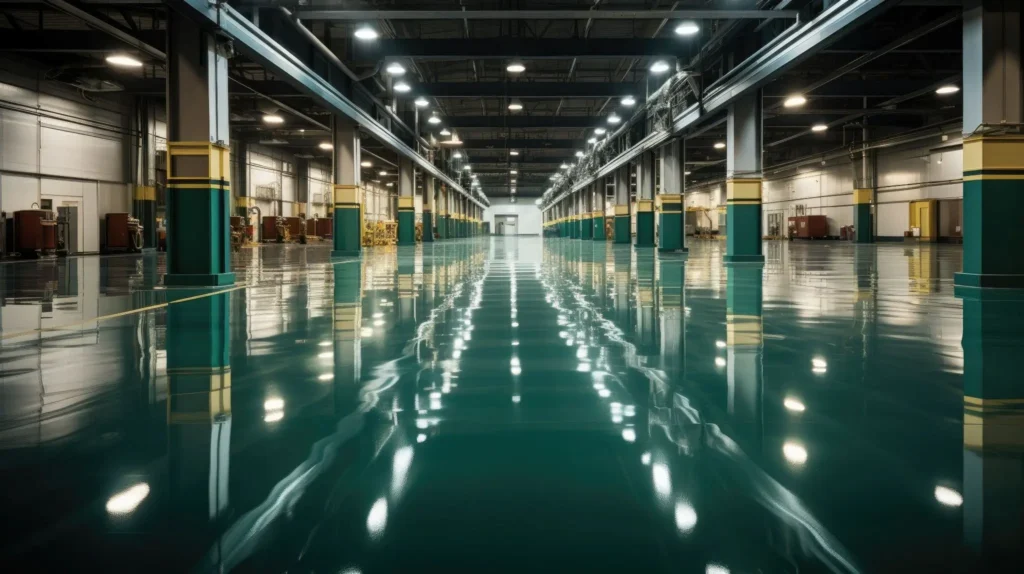
Textured Epoxy and Resin Systems for Industrial Interiors
For dry-to-moderate-moisture environments, epoxy and urethane floor systems provide durable, seamless surfaces that resist traffic wear, support cleaning, and integrate safety striping as part of the coating rather than an afterthought. These systems work well in warehouses, manufacturing floors, packaging areas, and controlled production environments.
Urethane Cement for Harsher Conditions
Where wet processes, thermal cycling, hot washdowns, or aggressive sanitation chemicals are present, urethane cement systems are built for the conditions that standard coatings can’t handle. They’re the appropriate choice when slip risk is driven by the fundamental nature of the environment, not just surface contamination.
Integrated Safety Striping and Aisle Markings
Striping that’s part of the floor system holds up where paint and tape don’t. Permanent aisle markings, pedestrian lane borders, forklift corridors, hazard zones, and keep-clear areas that are applied as part of a professional floor installation and meet OSHA’s 1910.176 marking requirements durably, not just at the time of installation.
When Floor Repair Is No Longer Enough
Some facilities reach a point where repair cycles aren’t solving the underlying problem. These are the signals:
- Repeated slip complaints or near-misses even after cleaning
- Worn or polished surfaces that stay slick when dry
- Cracks, spalling, or delamination that return within months of each repair
- Standing water that reappears after every washdown
- Striping that fades before the next scheduled repaint
- Audit findings or incident reports tied to the same zones quarter after quarter
At that point, the floor condition itself is the compliance risk. Patching the surface doesn’t fix the drainage, the coating system, or the substrate. A site evaluation that looks at the full floor condition, the traffic patterns, and the hazard profile is a more useful next step than another round of repairs.
Fix the Floor, Not Just the Symptoms
OSHA slip, trip, and fall hazards rarely come from a single dramatic failure. More often, they build over time through wet floors that never fully dry, damaged concrete that keeps getting patched, faded striping, blocked aisles, and surface conditions workers gradually learn to work around. Housekeeping is essential, but it cannot solve poor drainage, worn coatings, unclear traffic flow, or floors that no longer support safe movement.
That is why effective prevention goes beyond cleanup. It requires facilities to address the root causes behind recurring OSHA slips, trips, and falls. In many industrial environments, the right flooring repairs, anti-slip finishes, durable markings, and traffic-control upgrades can reduce risk more effectively than another temporary fix.
If your team is seeing repeat near-misses, recurring surface damage, or areas that stay slick, cracked, or hard to navigate, it may be time to look beyond maintenance and evaluate the floor itself.
Peckham Coatings helps industrial and commercial facilities identify the floor conditions that contribute to OSHA slip and fall risk and recommend practical solutions that improve safety, durability, and compliance. From anti-slip coatings and safety striping to full flooring-system upgrades, our team can help you build surfaces that perform under real operating conditions. Contact us today to schedule your site assessment.
Frequently Asked Questions
What are the guidelines for slips, trips, and falls under OSHA? The primary standards are 29 CFR 1910.22 and 29 CFR 1910.176. Together, they require that walking-working surfaces be clean, dry where feasible, free of hazards, regularly inspected, and repaired before reuse. Permanent aisles and passageways must be kept clear, in good repair, and appropriately marked.
What is the OSHA standard dealing with general slip and fall hazards? 29 CFR 1910.22 is the primary standard for walking-working surfaces in general industry. It covers floor conditions, drainage requirements, hazard removal, load capacity, and inspection and maintenance obligations.
What is the difference between a slip, a trip, and a fall? A slip occurs when there isn’t enough traction between a foot and the floor surface. A trip happens when a foot catches on an obstacle or surface irregularity. A fall is typically the result of a slip or trip that the person cannot recover from. Each has different primary causes and different prevention priorities.
What is the leading cause of slips, trips, and falls OSHA cites? OSHA’s walking-working surface citations consistently point to wet or contaminated floors, spills not corrected promptly, cluttered or unmarked aisles, damaged surfaces left unrepaired, and worn or missing aisle markings. The pattern is usually deferred maintenance and design conditions, not one-off incidents.
What is OSHA’s most cited violations list? OSHA publishes its Top 10 most cited standards annually. Verify the current list at OSHA.gov before publishing compliance-sensitive content, as rankings shift year to year. Walking-working surfaces consistently appears in the top ten for general industry.
Does OSHA require slip-resistant flooring? OSHA does not mandate a specific flooring product or texture. The standard requires that floors be maintained in a safe condition, kept dry where feasible, and provided with drainage where wet processes occur. Slip-resistant systems are widely used to meet those conditions in wet, oily, or high-traffic areas.
Can damaged concrete become an OSHA slip or trip hazard? Yes. Cracked concrete, spalling, uneven transitions, and failed patches are all walking-working surface conditions that OSHA can cite under 29 CFR 1910.22. The standard requires that surfaces be repaired before returning to service. Deferred concrete repair is a citable condition.
How often should walking-working surfaces be inspected? OSHA requires regular inspection without specifying a fixed interval. Most facilities establish quarterly or annual schedules, with more frequent checks in high-traffic zones, wet-process areas, and locations with a history of incidents or near-misses.
Do permanent aisles have to be marked? Yes. Under 29 CFR 1910.176, permanent aisles and passageways must be appropriately marked. OSHA does not specify an exact marking method, but the marking must be visible, durable, and clearly define the intended pedestrian or vehicle path.What flooring is best for wet industrial work areas? For areas with standing water, hot washdowns, or aggressive sanitation chemicals, urethane cement systems are generally the most durable choice. They resist thermal cycling, bond directly to concrete, and produce a seamless surface that handles wet conditions where standard epoxy coatings are not appropriate.