Why brewery floors fail faster than any other commercial floor
A brewery floor sees a combination of conditions that no other facility throws at concrete: caustic CIP solution at 180°F, lactic and acetic acid from spilled wort and beer, sugar that ferments and feeds biofilm, peracetic acid sanitizer, high-pressure washdown, thermal shock from hot wash water hitting a cold slab, and forklift traffic moving kegs and pallets over wet surfaces. Standard thin-mil epoxy is not engineered for any of this — it's engineered for dry warehouses.
We've been called in to repair brewery floors installed less than 18 months earlier by contractors who priced them like a dry warehouse. The fix costs 3× the original install because the failed coating has to come off before the right system goes down. This guide is what we wish every brewery operator knew before signing a coatings contract.
Brewery floor coating by zone
Different parts of the brewery have different service conditions. A one-system-fits-all spec wastes money in some zones and fails in others.
| Zone | Conditions | Recommended system | Cost / sf |
|---|---|---|---|
| Brewhouse / hot side | 180°F+ wort spills, steam, caustic CIP | Urethane cement trowel-down, 1/4″ | $13 – $18 |
| Fermentation cellar | Yeast slurry, glycol, daily washdown | Urethane cement slurry, 3/16″ | $10 – $14 |
| Packaging / canning / bottling | Beer spills, broken glass, forklift | Urethane cement slurry, 3/16″ | $10 – $14 |
| Cold storage / walk-in cooler | Thermal shock, condensation | MMA or urethane cement slurry | $11 – $16 |
| Keg wash | Pooled water, caustic, hot wash | Urethane cement trowel-down | $13 – $18 |
| Dry storage / warehouse | Pallet traffic, dry | Self-leveling epoxy, 40 – 60 mil | $5 – $8 |
| Taproom / public-facing | Foot traffic, occasional spills, aesthetic | Decorative flake broadcast, 60 mil | $7 – $10 |
Why thin-mil epoxy fails in a brewery within 12 months
Thin-mil epoxy (15–25 mils) fails in a brewery wet zone through three predictable mechanisms.
Thermal shock delamination
Epoxy's coefficient of thermal expansion is 4–5× that of concrete. When 180°F wash water hits a 55°F slab, the coating expands and the concrete doesn't. Bond line stress exceeds the adhesion strength and the floor pops off in sheets — usually within the first 60 days of operation. Urethane cement's CTE nearly matches concrete, which is why it doesn't do this.
Lactic acid attack
Fermenting wort and spilled beer produce lactic and acetic acid that sit in low spots and along cove bases. Standard novolac epoxies tolerate brief exposure; they don't tolerate continuous contact. Within 6–12 months you'll see the surface go chalky, then soft, then pitted to the substrate.
Topcoat wear-through under keg traffic
A full half-barrel keg weighs 160 lb. Dragging or rolling kegs across thin-mil epoxy abrades the topcoat in months. Once the base coat is exposed, water and acid reach the slab and the failure accelerates.
Drain detailing and cove base — where every brewery floor wins or loses
The slab itself is the easy part. What separates a 2-year floor from a 20-year floor is the detail work where the floor meets walls, drains, and equipment pads.
- ›Trench drains and floor sinks: integrate coating into the drain pan with a stainless or PVC reglet detail. A coating that stops 1/2-inch from the drain fails first at the drain.
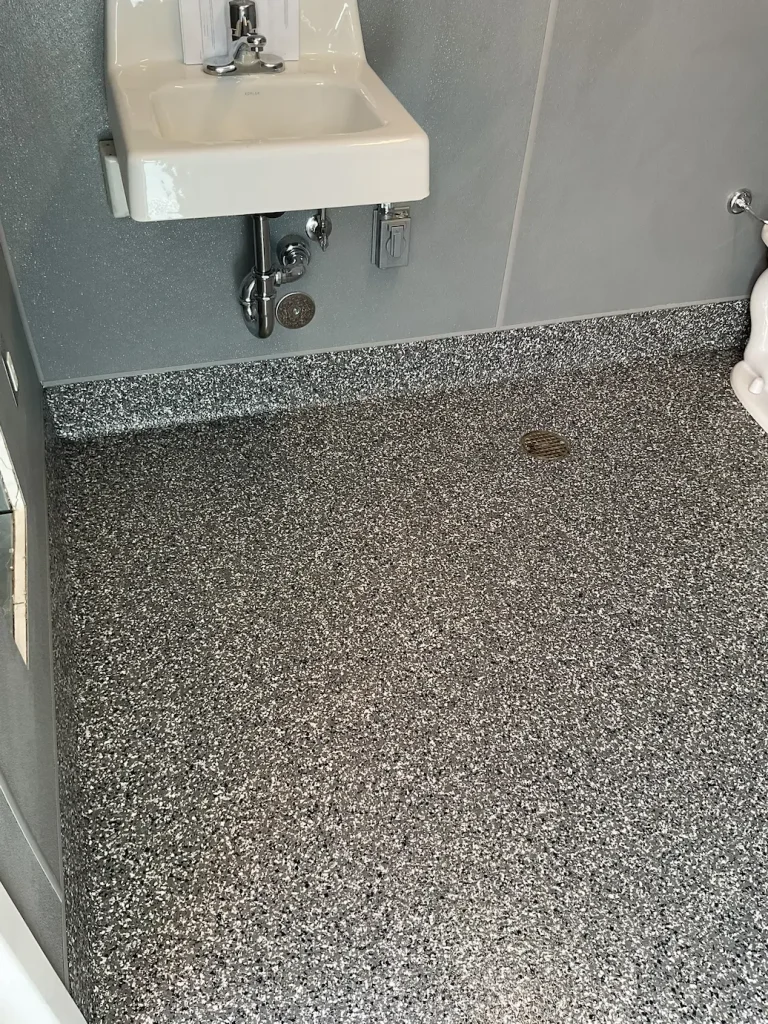
- ›Cove base: 4–6 inch coved transition from floor to wall, monolithic with the floor coating. No 90-degree corners where biofilm accumulates.
- ›Equipment pads: coat under and around tank skids before installation; retrofitting around in-place tanks leaves a failure path.
- ›Slope to drain: 1/8 inch per foot minimum. Standing water finds any weakness in the system.
- ›Joint and crack detailing: rout, fill with semi-rigid joint filler, then coat. Untreated joints telegraph cracks through the coating.
Slip resistance — TTB and OSHA both care
Brewery floors are wet most of the day. ANSI A326.3 dynamic coefficient of friction (DCOF) of 0.42 wet is the accepted threshold for high-traffic wet areas. Achieve it by broadcasting aluminum oxide or silica aggregate into the topcoat — 16-grit for aggressive grip, 36-grit for moderate. Smooth urethane cement straight off the trowel is too slick; specify a broadcast.
Planning brewery floor installation around production
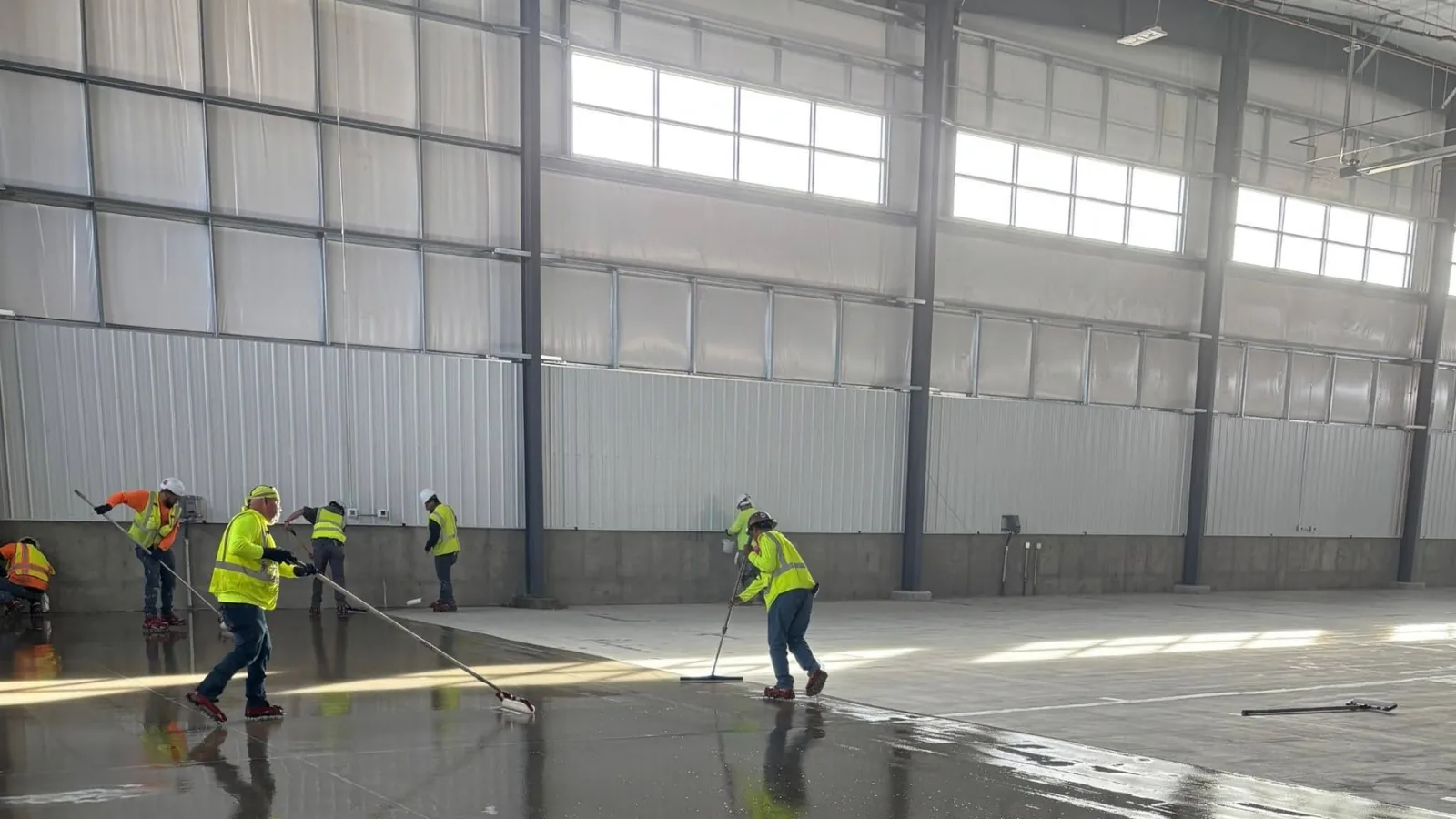
Most breweries can't shut down for a week. Plan installation in zones, scheduling around brew days, and pick chemistry that returns to service fast.
- ›Urethane cement slurry: 12 – 24 hours to foot traffic, 48 – 72 hours to full chemical service.
- ›MMA (methyl methacrylate): 1 – 2 hours to foot traffic, 4 hours to full service. The fast-cure choice for cold rooms and packaging lines that can't go dark for 3 days.
- ›Phased install: brewhouse on a Monday shutdown, fermentation cellar next week, packaging the week after. We've done dozens of operating-brewery installs this way.
- ›Containment: dust shrouds on shotblasters and grinders keep the rest of the brewery in operation while one zone is being prepped.
FAQ
What is the best floor coating for a brewery?
Urethane cement — slurry at 3/16-inch for fermentation, packaging, and cold storage zones; trowel-down at 1/4-inch for the brewhouse and keg wash. It tolerates thermal shock from hot caustic CIP and resists lactic/acetic acid from spilled beer, which standard epoxy does not.
How do you seal a brewery concrete floor?
A standalone concrete sealer is not appropriate for a working brewery — silicate or acrylic sealers fail within months under caustic and acid exposure. Specify a full urethane cement coating system with integrated cove base and drain detailing instead.
Can I use epoxy in a brewery?
Standard epoxy is appropriate for the dry warehouse and storage areas of a brewery. In any wet zone — brewhouse, cellar, packaging, cold storage, keg wash — epoxy will fail within 12 to 24 months. Specify urethane cement for those areas.
How long does a brewery floor coating last?
A properly installed urethane cement system in a brewery lasts 15 to 20 years with normal maintenance. Thin-mil epoxy in the same conditions typically fails within 1 to 2 years and needs to be removed and replaced with the correct system.
How long does brewery floor installation take?
Urethane cement systems return to foot traffic in 12 to 24 hours and full chemical service in 48 to 72 hours. MMA returns to service in 4 hours and is the right choice when production downtime must be minimized — common for cold storage and packaging zones.