What makes winery floors uniquely demanding
Winery floors face a chemistry stack that destroys most coatings: tartaric acid (pH ~3.5) and malic acid from grape juice and wine spills, sugar that feeds biofilm and ferments into more acid, sulfur dioxide and peracetic acid from sanitation, sodium hydroxide CIP from tank cleaning, and seasonal swings from a 50°F cellar to a 90°F crush pad in September. Add forklift and pallet jack traffic moving barrels and cases, and standing water from constant washdown.
We've installed and repaired winery floors across California's Central Coast, Napa, Sonoma, the Willamette Valley, and Walla Walla. The wineries that get 20-year floors are the ones that specified urethane cement in the wet zones from day one. The wineries that re-coat every 3 years are the ones that bought an industrial epoxy quote without asking what acid resistance the system actually had.
Winery flooring by zone
Specify by zone. The crush pad and barrel room are not the same problem.
| Zone | Primary exposure | Recommended system | Lifespan |
|---|---|---|---|
| Crush pad (often exterior) | Tartaric acid, sugar, UV, seasonal | Urethane cement trowel-down, 1/4″ | 15 – 20 years |
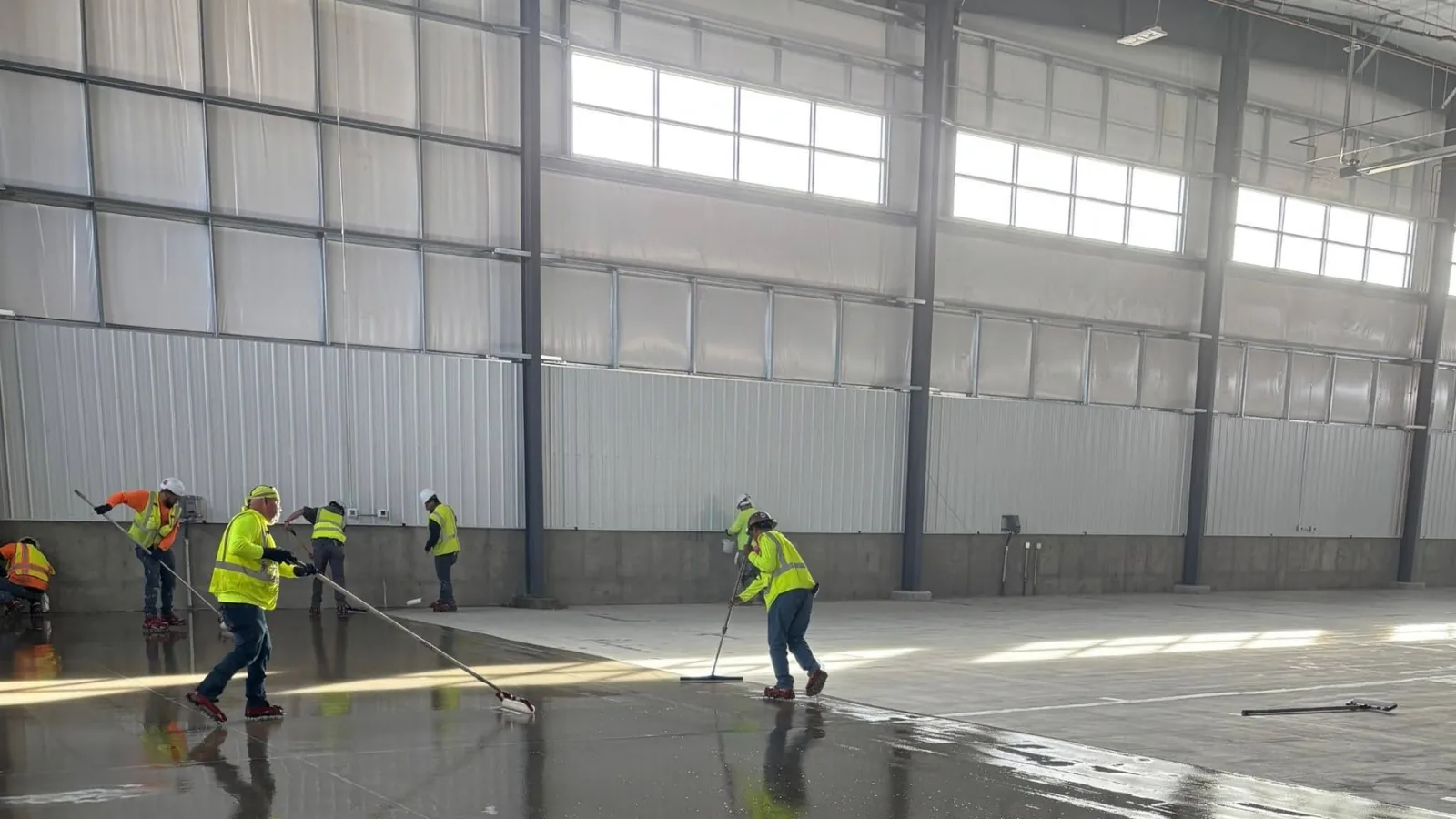
| Fermentation cellar | Spills, CIP, daily washdown | Urethane cement slurry, 3/16″ | 15 – 20 years |
| Barrel room | Light moisture, foot/forklift traffic | High-build epoxy 60 – 80 mil with novolac topcoat | 10 – 15 years |
| Bottling line | Glass, wine spills, forklift | Urethane cement slurry, 3/16″ | 15 – 20 years |
| Lab | Concentrated acids, sanitizers | Novolac epoxy, 60 mil | 10 – 15 years |
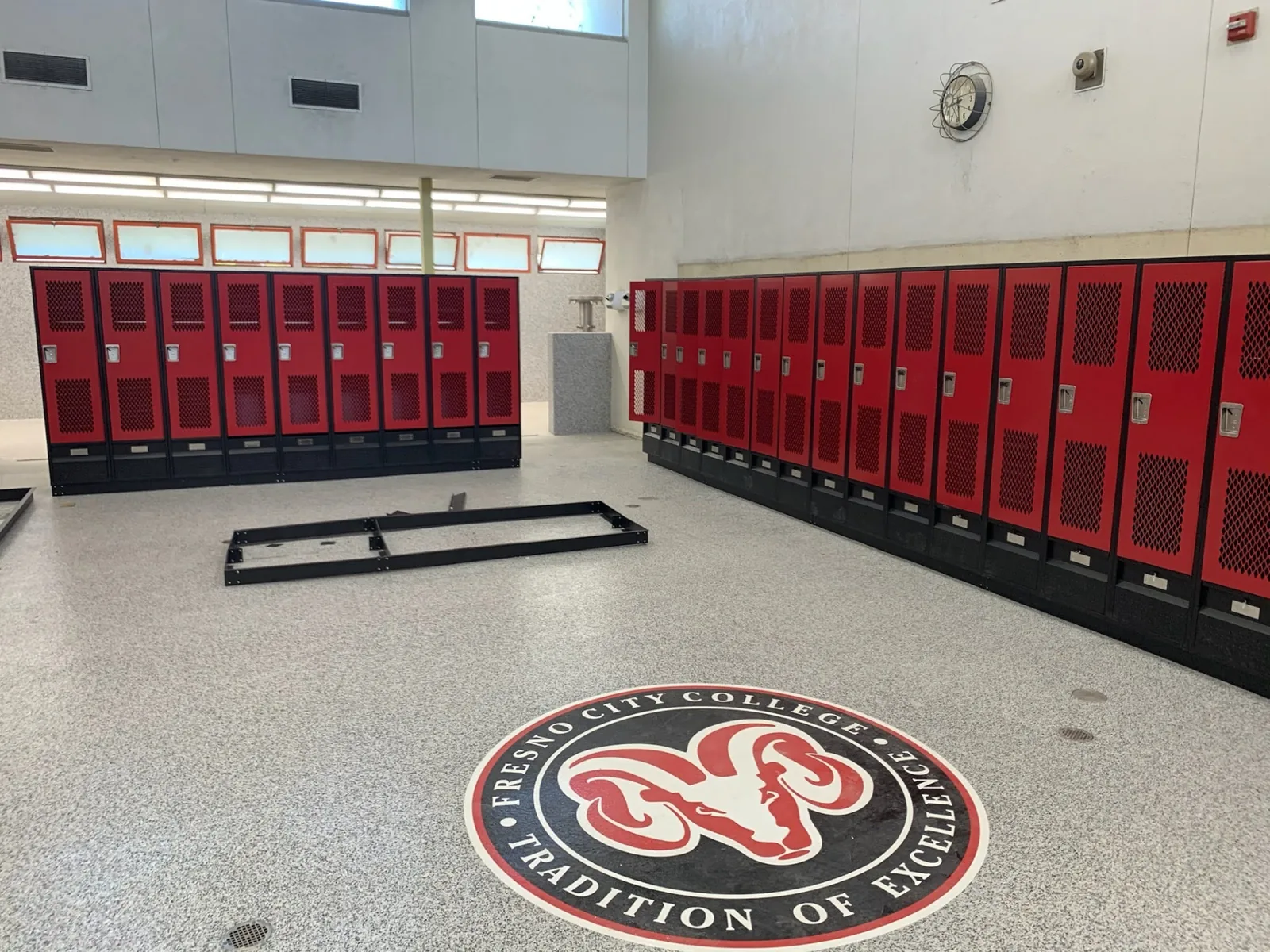
| Tasting room | Foot traffic, aesthetic, occasional spills | Decorative flake or metallic, 60 mil | 10 – 15 years |
| Warehouse / case storage | Pallet traffic, dry | Self-leveling epoxy, 40 – 60 mil | 7 – 10 years |
Why standard epoxy fails on a crush pad
Tartaric acid at pH 3.5 will etch a standard bisphenol-A epoxy. Sugar from must and juice ferments in pores and cracks, generating more acid in place. By the second harvest, you'll see surface chalking; by the third, pitting through to the substrate. Novolac epoxies do better than standard epoxy but still don't match urethane cement's combination of acid resistance, thermal tolerance, and impact strength on a crush pad that sees forklifts dumping bins.
Drain integration and slope — the detail that defines a winery floor
- ›Trench drains with integrated coating reglet — coat into the drain pan, not stopping short.
- ›Slope to drain: 1/8 to 1/4 inch per foot. Standing wine and water on any low spot will etch the surface and grow biofilm.
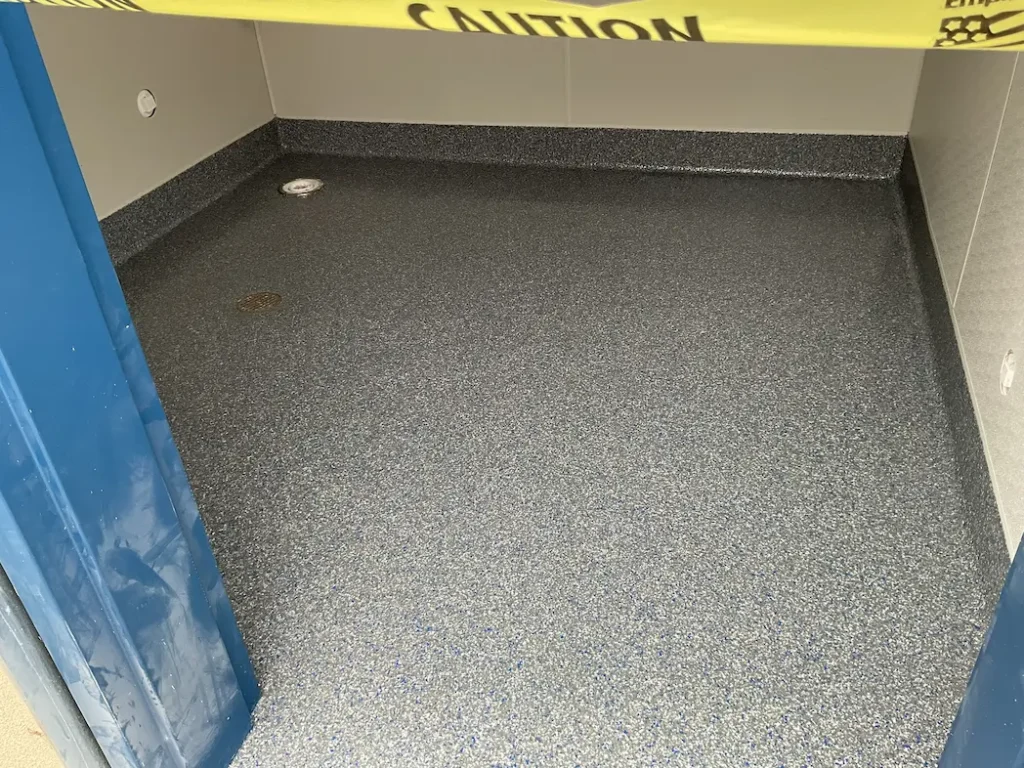
- ›Cove base: 4–6 inch monolithic cove from floor to wall and around tank pads. No 90-degree joints.
- ›Tank pad coatings: coat the pad with the same system before the tank is set. Around-the-tank retrofit always leaves a failure line.
- ›Hose bib and quick-disconnect zones: extra-thick aggregate broadcast where hoses drag.
Slip resistance and TTB sanitation
TTB and FDA-equivalent sanitation expectations require smooth, cleanable, non-absorbent surfaces with cove base. Slip resistance under ANSI A326.3 should hit DCOF 0.42 wet for production zones. Achieve both with a urethane cement slurry plus broadcast aggregate (16- or 24-grit aluminum oxide) and a chemical-resistant topcoat. Smooth trowel finishes look great but become hazards once wine is on the floor — see slip-resistant epoxy flooring for how traction gets built into a production floor.
Installation timing — harvest is non-negotiable
Most winery work happens January through July. Once crush starts in late August, floors don't come down until November at the earliest. Plan accordingly: budget approval in late winter, prep and installation in spring, full chemical cure before harvest. MMA is an option for emergency mid-harvest repairs (4-hour return-to-service), but the right play is a planned install during the off-season.
Related resources
FAQ
What is the best floor coating for a winery?
Urethane cement — trowel-down on the crush pad, slurry in the fermentation cellar and bottling line. It resists tartaric and malic acid, tolerates the thermal swings of a working winery, and lasts 15 to 20 years. Standard epoxy is not acid-resistant enough for these zones.
Can I use epoxy on a winery floor?
Yes for the barrel room, lab, tasting room, and dry case storage — specifically novolac epoxy in the lab and decorative or self-leveling epoxy elsewhere. No for the crush pad, fermentation cellar, and bottling line, where urethane cement is the correct system.
How do you protect a concrete winery floor?
A surface sealer is not adequate for a working winery. Specify a full coating system: urethane cement in the production zones with integrated cove base and drain detail, novolac or high-build epoxy in support zones, and decorative epoxy in public-facing areas.
How long does a winery floor coating last?
A properly specified urethane cement system in a fermentation cellar or on a crush pad lasts 15 to 20 years. High-build epoxy in a barrel room lasts 10 to 15 years. Thin-mil epoxy in wine production zones typically fails within 2 to 4 years.
When should winery floor work be scheduled?
January through July, well clear of harvest. Coatings need 48 to 72 hours of chemical cure before exposure to wine, juice, or CIP chemistry, and you don't want any of that on a curing floor during crush.