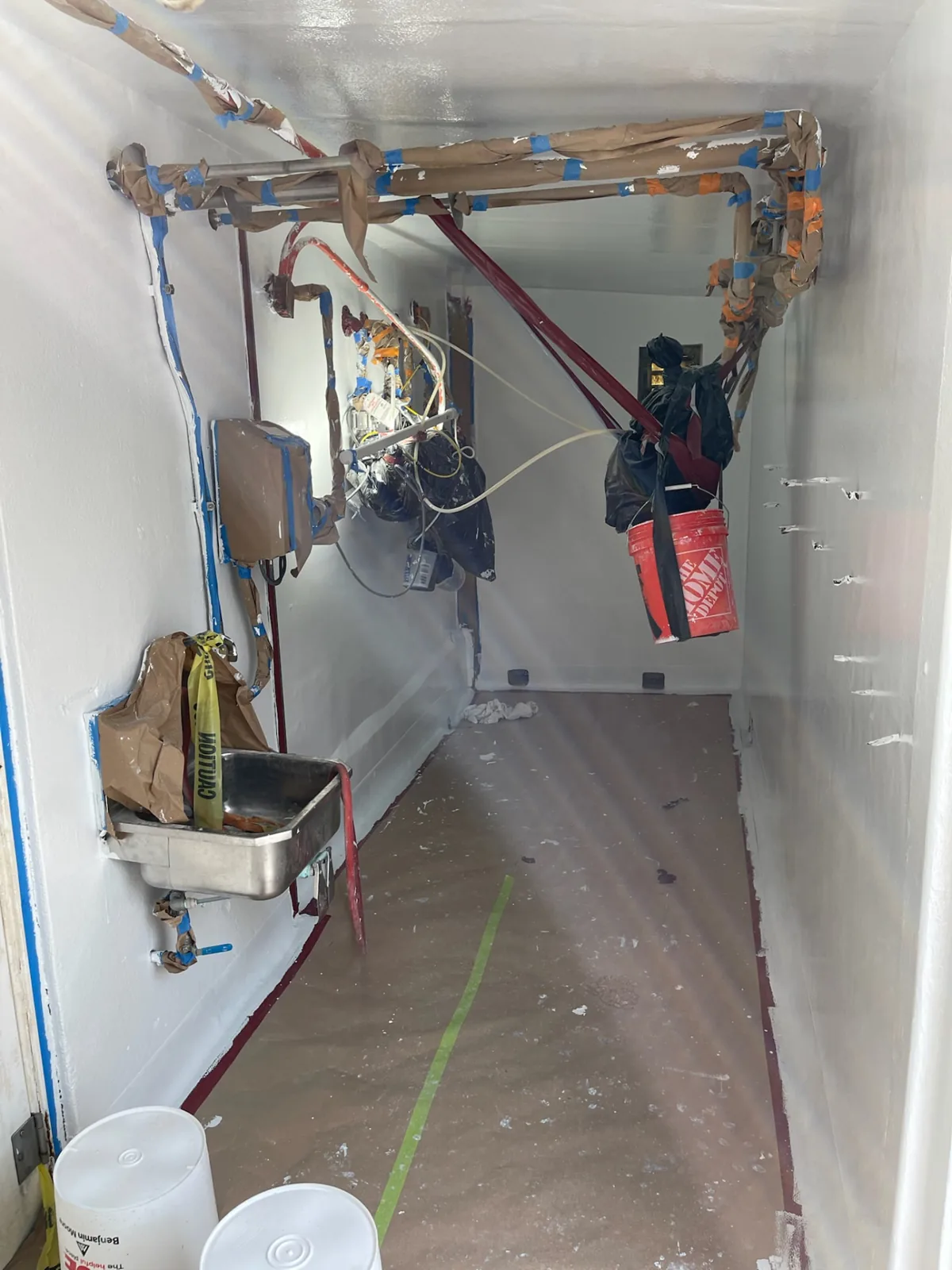
The damaged wall behind a production line may occupy only a few square feet. Getting access to it can involve a much larger job: moving equipment, protecting services, coordinating trades and keeping the area available long enough for the repair system to cure.
When planning repairs to epoxy wall coatings, define those arrangements before agreeing on an installation date. A scope based only on the visible patch can leave the facilities team responsible for access work that nobody priced or scheduled.
Mark the work on a wall elevation
Start with photographs and a simple wall elevation showing the affected areas. Give each location a reference that appears in the quotation, site notes and completion photos. Include nearby pipework, brackets, electrical enclosures, doors and equipment that restrict access.
Ask the contractor to separate visible coating damage from any underlying issue that needs investigation. A chipped finish, a recurring crack and a damp area may require different assessments. Record what is known and what remains uncertain instead of treating every mark as the same repair.
Agree on how the scope will change if removing loose material exposes a larger area. Identify who can authorize additional work and how that decision will be recorded while the room is unavailable.
Decide what stays and what must move
Walk the area with the people responsible for production and building services. Establish which equipment can remain, which items need protection and which obstructions must be removed by the appropriate trade. Name the person responsible for each action.
Include the route for access equipment and materials, not just the space directly in front of the wall. A room may be clear when production stops but inaccessible once another contractor stores equipment in the doorway.
Our wall and ceiling systems cover several types of facility surface. For a repair project, send access photographs with the wall details so the discussion starts with the actual working conditions.
Confirm the existing system before specifying the repair
Find the original coating records, available product data and previous repair notes. Ask the contractor how the existing finish and substrate will be assessed, and which manufacturer guidance supports the proposed repair materials.
Avoid choosing a patch material by color alone. Request a written description of the repair build, its preparation requirements and the transition into the retained finish. If a sample or trial area is needed, agree on its location and what the project team will review.
Fiberglass wall coatings and urethane wall coatings also appear in facility specifications. If records use either description, keep it in the assessment brief. Ask for confirmation of the installed system before assuming a repair intended for an epoxy finish is suitable.
Resolve penetrations and trade work together
Equipment upgrades can create new openings or leave old fixings behind. List the penetrations and brackets affected by the work, then agree who is responsible for the substrate repair, service installation and coating detail at each location.
Ask for the proposed detail at pipe entries, wall bases and changes of material where they fall within the repair area. Keep any requirement for movement or a separate sealant detail with the relevant drawings and manufacturer recommendations. The facilities team should be able to identify which trade owns each part of the finished assembly.
For example, if a pipe bracket will be relocated, include its removal and replacement in the sequence. Repairing and finishing the wall before the final fixing position is agreed risks a second disturbance of the same area.
Build the schedule around the selected materials
Separate access preparation, substrate repairs, coating application and the return of equipment in the programme. Ask the contractor to identify when the area can be inspected, when fittings can be reinstated and when normal cleaning can resume.
Sika's technical information for a reinforced epoxy wall coating distinguishes tack-free time, full cure and recoat intervals. Its times depend on conditions. This illustrates why a short description such as "dry tomorrow" is not enough to plan all the activities around a wall repair.
Use the requirements for the system actually selected for your project. Give the facilities team a clear release point rather than leaving them to judge readiness by appearance.
Record the finish and the areas handed back
Agree before installation how the repaired area will be reviewed for appearance and continuity with the retained wall. A localized repair may remain visible; settle expectations for color and texture before the work starts.
At handover, request completion photographs using the same location references as the original scope. Retain the product details, repair boundaries, applicable maintenance instructions and any outstanding items. Include the completion of reinstatement work so a finished coating is not mistaken for a fully operational room.
Frequently asked questions
Can equipment stay in place during wall coating repairs?
That depends on access, protection and the proposed work. Establish what can remain during the site assessment, with responsibilities for any removal or reinstatement written into the scope.
Will a patch match the original wall exactly?
Agree on expectations before work begins. Ask whether a sample is appropriate and how the repair boundary, color and texture will be reviewed against the retained finish.
When can the repaired wall be cleaned again?
Use the selected system's manufacturer requirements and the contractor's documented release instructions. Include your cleaning method in the project brief so the timing can be confirmed for that use.
Plan the repair around your facility
Send us photographs of the affected walls, details of nearby equipment and your available work window. We can discuss access, the repair scope and the information needed to plan the job. Contact us about your wall coating repairs.