Introduction
In 2024, the Bureau of Labor Statistics recorded 844 fatal work injuries from slips, trips, and falls. Across general industry, these incidents consistently rank among the leading causes of days-away-from-work cases, workers' compensation claims, and OSHA citations.
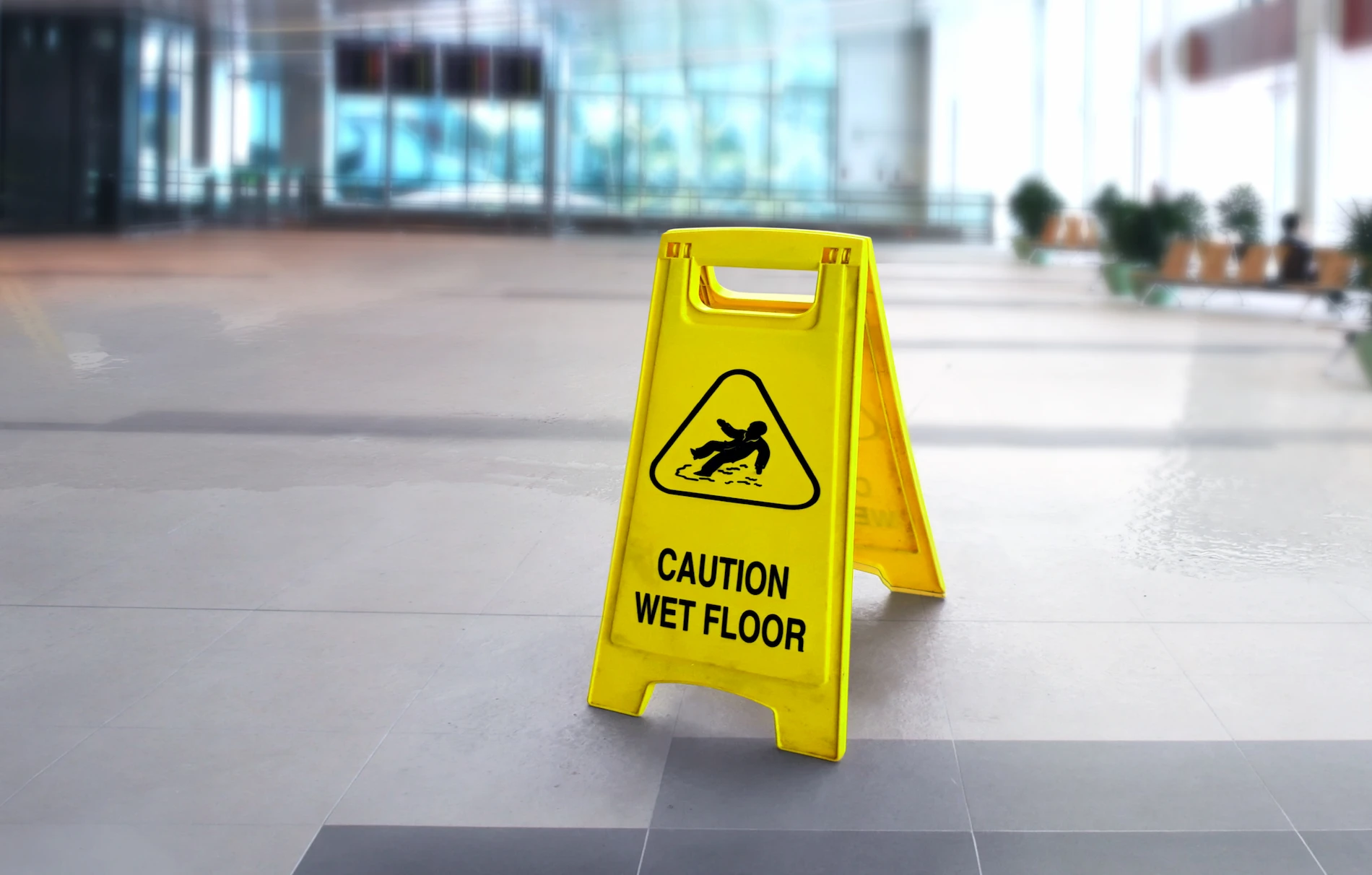
Most facilities respond to this risk with housekeeping protocols, wet floor signs, and footwear policies. Those measures matter. But in warehouses, manufacturing plants, food processing facilities, and distribution centers, a significant portion of slip and fall incidents trace directly back to the floor itself: surfaces that are worn, smooth, chemically contaminated, or simply not specified for the conditions they face every day.
A properly specified non-slip epoxy coating addresses the hazard at its source. This guide covers how these systems work, what OSHA actually requires, which zones need the most attention, and when epoxy is the right answer versus when a higher-duty system is more appropriate.
Why Slip, Trip, and Fall Incidents Keep Happening Despite Prevention Efforts
The most common explanation facilities give for recurring slip incidents is housekeeping: someone did not clean up a spill fast enough, or a wet floor sign was not placed in time. That explanation is sometimes accurate, but it is rarely complete.
In most industrial environments, the floor itself is a contributing factor. Surfaces that have been polished smooth by years of foot and forklift traffic no longer provide meaningful traction even when dry. Coatings that have worn away in high-traffic lanes leave exposed concrete that absorbs oils and moisture and becomes progressively more hazardous. Cracks and uneven transitions create trip points that no amount of housekeeping can eliminate. Standing water that pools in low spots because drainage was never adequate cannot be mopped away permanently.
OSHA's walking-working surface standard, 29 CFR 1910.22, requires that floors be maintained in a clean, dry (where feasible), and hazard-free condition, and that hazardous conditions be corrected before employees return to the surface. The standard also requires that wet-process areas have proper drainage and dry-standing options. What it does not do is specify a particular floor material or coating product. Compliance is determined by the condition of the surface, not the brand of the coating on top of it.
That distinction matters because it places the burden on the facility to evaluate and correct conditions continuously, including the floor system itself when that system is the root cause of recurring hazards.
The Three Hazard Types and What Each Requires at Floor Level
Slips, trips, and falls are often grouped together, but they result from different physical conditions and require different floor-level solutions.
| Hazard Type | Common Causes | Floor-Level Fix |
|---|---|---|
| Slip | Wet or oily surfaces, worn coatings, smooth concrete, poor drainage, chemical residue | Non-slip epoxy coating with aggregate; broadcast quartz or urethane cement in wet zones |
| Trip | Cracks, spalling, uneven transitions, delaminated coatings, faded or missing aisle markings | Concrete repair and resurfacing; seamless recoat; integrated safety striping |
| Fall | Slip or trip that cannot be recovered from; ramps, docks, sloped surfaces without adequate grip | Higher-traction aggregate on ramps and slopes; urethane cement where wet conditions are persistent |
How Non-Slip Epoxy Coatings Work
Standard epoxy, applied and cured without modification, produces a smooth, hard surface that can be highly slippery under wet or oily conditions. Slip resistance is not a property of the resin itself. It is engineered into the system through deliberate specification choices made before and during installation.
Aggregate Broadcast Into the Topcoat
The most common method for creating a non-slip epoxy coating is broadcasting aggregate into the wet topcoat before it cures, or blending aggregate directly into the coating during mixing. Aluminum oxide, silica sand, and polymer grit are the most widely used materials. Each produces a different surface profile: aluminum oxide is extremely hard and durable; silica provides a moderately coarse texture; polymer grit is softer and can be used where a less aggressive surface is appropriate.
The aggregate particles interrupt the flat surface plane and give footwear something to mechanically grip. Coarser aggregate increases traction but also increases surface roughness, which affects cleanability and maintenance requirements. The right aggregate and density depends on the specific hazard conditions in each zone.
Full-Broadcast Quartz Systems
In areas with persistent moisture, grease exposure, or high foot traffic, a full-broadcast quartz system provides more consistent and durable traction than spot-broadcast aggregate in a topcoat. A complete layer of quartz aggregate is embedded into the base coat, creating a uniform texture profile across the entire surface. These systems are widely used in food processing areas, commercial kitchens, locker rooms, and wet production zones where traction has to be reliable under a range of contamination conditions.
Anti-Slip Topcoat Products
Where the underlying floor system is structurally sound and adhering well, an anti-slip topcoat can upgrade traction without a full system rebuild. These products incorporate aggregate into a ready-to-apply coating that goes over the existing surface. Surface preparation is still required; a topcoat applied over a poorly prepped surface will delaminate under traffic regardless of the traction aggregate it contains.
Texture Profile Calibrated by Zone
Not every zone in a facility requires the same traction level. A dry warehouse aisle, a wet processing area, and a ramp to a loading dock each present different slip risks and different cleaning demands. Specifying a single texture profile across an entire facility typically results in under-protection in the highest-risk areas and over-texturing in areas where a smoother surface would be easier to maintain. Zone-by-zone specification is the more defensible approach from both a safety and a compliance standpoint.
Which Zones in Industrial Facilities Need Non-Slip Epoxy Most
Not all areas of an industrial facility carry equal slip risk. The following zones consistently generate the highest concentration of incidents and OSHA citations related to walking-working surface conditions.
Wet Processing and Washdown Areas
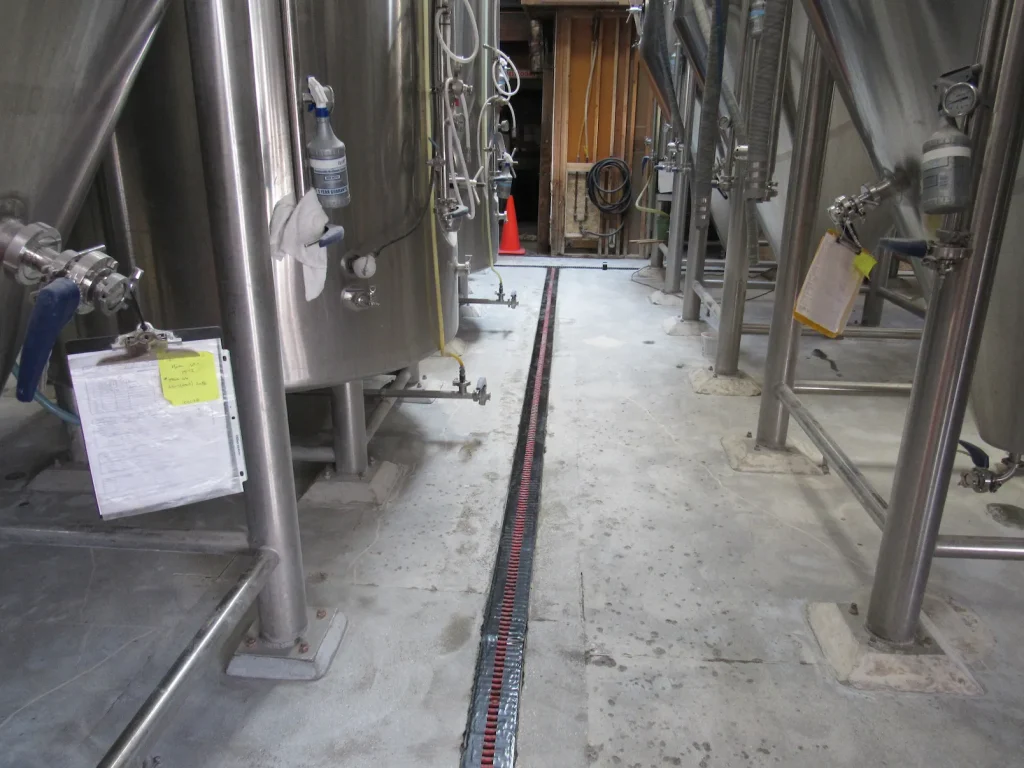
In food processing, pharmaceutical, and chemical manufacturing facilities, floors in washdown zones stay wet for significant portions of every shift. Standing water, cleaning chemical residue, and the transition between wet and dry areas all contribute to slip exposure. These zones require a non-slip epoxy coating specified for wet conditions: full-broadcast quartz or, in harsh environments with thermal cycling and aggressive sanitation chemicals, a urethane cement system with a traction surface profile.
Loading Docks and Entry Points
Transition points between interior and exterior surfaces concentrate slip and trip risk. Rain, snow, tracked-in moisture, and the transition between different floor materials or elevations all create hazardous conditions at entries and dock areas. Ramps that connect dock plates to warehouse floors are among the highest-risk surfaces in any distribution facility. More aggressive aggregate and, in outdoor-adjacent areas, a system suited to freeze-thaw exposure are appropriate specifications for these zones.
Manufacturing Aisles With Oil and Coolant Exposure
CNC machining areas, assembly lines with lubricated components, and similar manufacturing environments regularly deposit oils, coolants, and metal particulate on the floor surface. These contaminants reduce traction significantly on smooth or lightly textured surfaces. Medium-aggregate non-slip epoxy coatings perform well in these environments when the base system is matched to the chemical exposure; broadcast quartz is appropriate in areas where oil accumulation is more severe or where cleaning chemistry is aggressive.
Ramps, Slopes, and Elevated Transitions
Any sloped surface amplifies the slip risk present in the surrounding zone. A ramp that connects two floor levels in a warehouse, or a sloped drain path in a food processing area, requires a more aggressive aggregate profile than the surrounding flat floor because the grade adds a mechanical component to any traction failure. Urethane cement with a coarse aggregate broadcast is often the appropriate specification for ramps in wet or oily environments.
Areas With Worn or Polished Existing Coatings
Floors that were adequately slip-resistant when installed but have been polished smooth by years of forklift and foot traffic represent a common and frequently overlooked hazard. The coating has not necessarily failed structurally, but its traction profile has degraded to the point where it no longer provides adequate grip. A slip-resistant topcoat or full recoat with aggregate can restore traction, provided the underlying system is still adhering correctly.
What OSHA Requires and What It Does Not
OSHA's walking-working surface standards are frequently misrepresented in product marketing and even in safety training materials. Two points are worth stating clearly.
First, OSHA does not mandate a specific coefficient of friction for industrial floors. The agency addressed this directly and has not established a numerical friction threshold that floors must meet. Claims that a product is "OSHA-rated" or achieves an "OSHA-compliant COF" have no regulatory basis. Compliance is determined by whether the surface is maintained in a safe condition, not by whether it achieves a specific test score.
Second, 29 CFR 1910.22 requires that hazardous conditions be corrected or guarded before employees use the surface again. A floor that is documented as a slip hazard, whether through incident reports, near-miss logs, or internal safety audits, and then left unchanged, is a citable condition regardless of what the inspection schedule says. The obligation to correct runs continuously, not only at scheduled intervals.
In practice, this means that facilities relying on housekeeping alone to manage slip hazards on a floor that structurally cannot drain, dry, or maintain traction are not meeting the standard. The floor condition itself may be the compliance gap.
When Non-Slip Epoxy Is Not the Right Answer
A non-slip epoxy coating is an effective solution across a broad range of industrial and commercial environments. It is not appropriate for every condition.
Standard epoxy systems, including those with aggregate traction additives, are not suited to environments with constant standing water and saturated substrates, steam cleaning or hot-water washdowns that exceed the coating's thermal tolerance, rapid temperature cycling between cold and hot zones, or aggressive caustic cleaning agents used in heavy sanitation programs.
In these environments, the aggregate in the topcoat does not overcome the fundamental limitation of the base resin system. Urethane cement is engineered for these conditions. It tolerates thermal shock, bonds directly to concrete without moisture sensitivity, produces a seamless surface, and can be specified with traction aggregate for slip resistance as well. Using epoxy as the base system in a washdown-heavy environment and adding aggregate is not a substitute for selecting the correct resin system for the conditions.
Striping, Markings, and Visual Controls as Part of the Floor System
Non-slip epoxy coating addresses traction. It does not address the trip hazards and traffic conflicts that generate another large share of industrial floor incidents.
OSHA's 29 CFR 1910.176 requires that permanent aisles and passageways in areas where mechanical equipment operates be appropriately marked. Markings that have faded, peeled, or been worn away by forklift traffic are not markings in any meaningful safety sense; they are ghost images that workers eventually stop reading.
Safety striping applied as part of a floor coating system, using colored epoxy or urethane integrated into the floor surface, lasts significantly longer than paint applied over an existing coating. Forklift lanes, pedestrian corridors, hazard zones, and keep-clear areas defined at the time of installation rather than painted on afterward produce a more durable and more readable result. This is not an aesthetic upgrade; it is part of the OSHA compliance picture for facilities where mechanical equipment and pedestrians share floor space.
Related Peckham services
Fix the Floor, Not Just the Protocol
Housekeeping protocols, wet floor signs, and footwear requirements are necessary. They are not sufficient when the floor itself is generating the hazard. A surface that cannot maintain traction under the conditions it faces every day is an infrastructure problem, and infrastructure problems require infrastructure solutions.
A properly specified non-slip epoxy coating, matched to the actual contaminants, traffic, and cleaning demands of each zone in your facility, addresses slip risk at its source rather than managing it shift by shift. Combined with integrated safety striping, correct drainage, and substrate repair where the concrete itself is the problem, the result is a floor that works as part of your safety program rather than against it.
FAQ
Does OSHA require non-slip epoxy coating in industrial facilities?
OSHA does not mandate a specific coating product or texture. Under 29 CFR 1910.22, floors must be maintained in a clean, dry (where feasible), and hazard-free condition. Where wet processes create slip hazards, the standard requires drainage and dry-standing options. Non-slip epoxy coatings are widely used to meet these conditions in wet, oily, and high-traffic environments, but the standard specifies an outcome, not a material.
What aggregate is used in non-slip epoxy coatings?
The most common aggregates are aluminum oxide, silica sand, and polymer grit. Aluminum oxide is extremely hard and durable, making it appropriate for high-traffic or high-abrasion environments. Silica provides a moderately coarse texture suited to general industrial use. Polymer grit is softer and used in environments where a less aggressive surface profile is appropriate. The correct choice depends on the traction requirement, traffic type, and cleaning protocol for each zone.
Can you add slip resistance to an existing epoxy floor?
Yes, if the existing floor is structurally intact and the coating is adhering well across the surface. A slip-resistant topcoat with aggregate can upgrade traction without a full system rebuild, provided surface preparation is completed correctly. If the existing coating shows delamination, cracking, or moisture damage, those underlying conditions must be addressed before a topcoat will hold.
How often does non-slip aggregate wear down and need to be replaced?
Wear rate depends on traffic type, frequency, and the harshness of cleaning chemicals. In light commercial environments, a well-specified system typically lasts five to ten years before the aggregate profile degrades enough to affect traction. In heavy industrial environments with forklift traffic and daily washdowns, the timeline may be shorter. Periodic inspection of high-traffic areas identifies wear before it becomes a hazard.
What is the difference between a non-slip epoxy coating and an anti-slip topcoat?
A non-slip epoxy coating refers to a full floor system designed with traction built in from installation, including aggregate broadcast into one or more layers of the system. An anti-slip topcoat is a product applied over an existing floor surface to upgrade traction without a full system installation. Both can be effective; the right choice depends on whether the existing floor is sound enough to support a topcoat, or whether the system needs to be rebuilt.
What floors are most at risk for OSHA citations related to slip hazards?
OSHA citations for walking-working surface conditions most commonly involve wet or contaminated floors that lack adequate drainage or traction, spills or leaks that are not corrected promptly, damaged or uneven surfaces that create trip hazards, and aisles where markings have faded or disappeared. Facilities with recurring incidents or near-miss reports in the same floor zones are at the highest citation risk because documented hazards that are not corrected are a clear standard violation.