OSHA floor marking colors at a glance
OSHA 29 CFR 1910.144 sets the color code for marking physical hazards. ANSI Z535.1 and the ANSI MH16.1 (rack standard) extend it into the practical color system used on warehouse and manufacturing floors. Together they define what each stripe color must mean — and inspectors expect consistency across your facility.
This is a bookmarkable reference. Print it, post it in your safety office, and use it to audit your existing floor markings. When it's time to actually lay out or re-stripe a building, the warehouse floor striping process walks through widths, prep, and durable striping materials.
| Color | Meaning | Typical use |
|---|---|---|
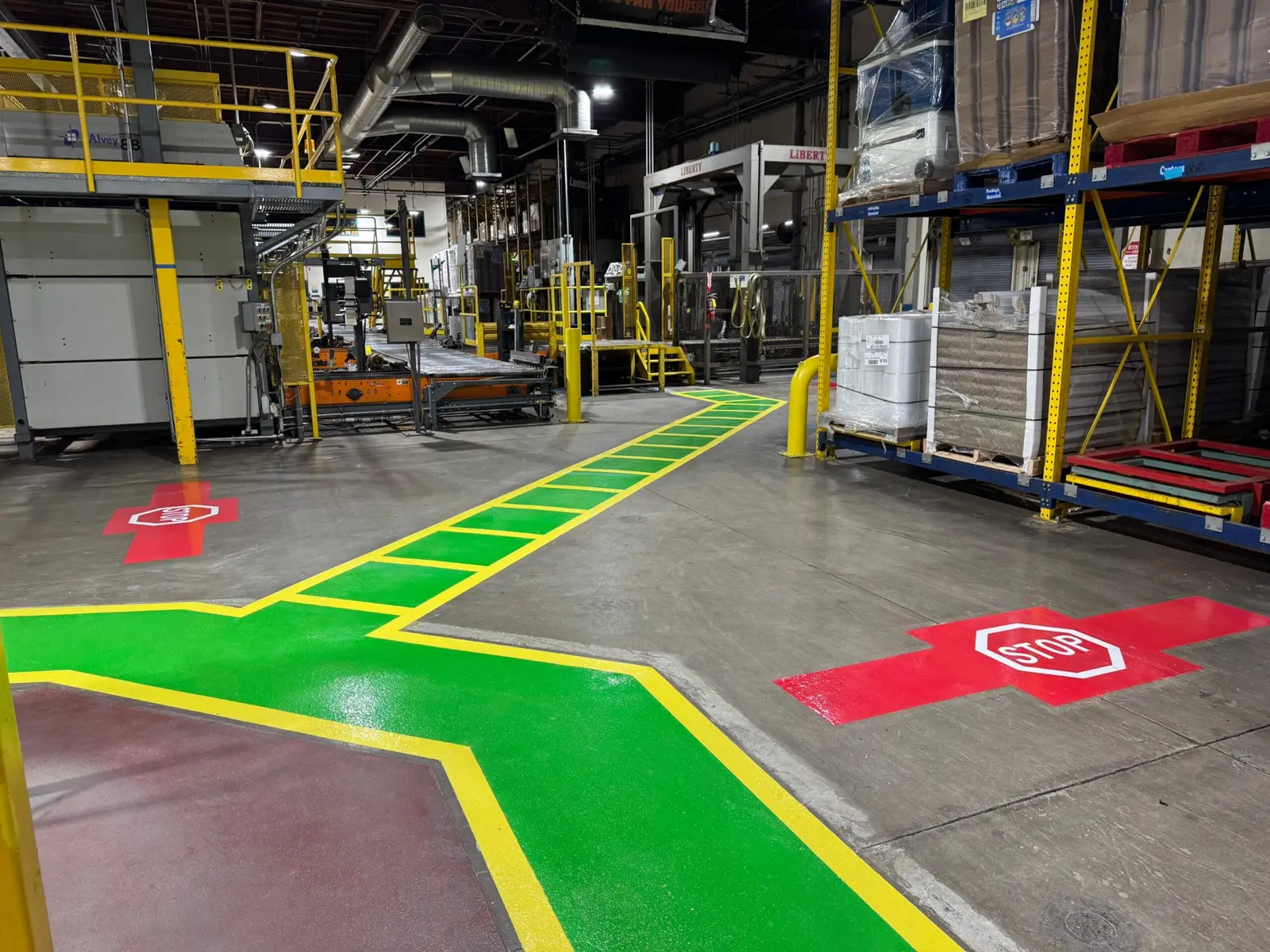
| Yellow | Caution / physical hazard | Aisle borders, work cells, traffic lanes |
| Red | Danger / fire / emergency stop | Fire equipment, e-stops, defective material |
| Orange | Warning of dangerous parts of machines | Energized equipment, pinch points |
| Green | Safety / first aid | Eyewash, first-aid stations, safety equipment |
| Blue | Informational / out-of-service equipment | Repair zones, equipment under maintenance |
| Black / White / Black-and-White | Housekeeping / traffic flow | Pedestrian walkways, equipment locations |
| Black-and-Yellow (striped) | Physical hazard requiring caution | Forklift charging, low overhead, fall hazards |
| Red-and-White (striped) | Areas to keep clear for safety reasons | Electrical panel clearance, eyewash access |
| Black-and-White (striped) | Areas to keep clear for operations | Door swings, equipment access |
Aisle and walkway width standards
OSHA 1910.22(b) requires permanent aisles and passageways to be 'appropriately marked' and kept clear. ANSI MH16.1 and good practice define the dimensions inspectors expect to see.
- ›Stripe width: 2 inches minimum, 4 inches recommended for forklift-traveled aisles, 6 inches for primary traffic routes.
- ›Pedestrian walkway: 3 feet (36 inches) minimum width between stripes.
- ›Forklift aisle: width of widest forklift + load + 3 feet (typically 12–13 feet for sit-down counterbalance).
- ›Dual-direction aisle: width of two widest forklifts + load + 3 feet.
- ›Stripe placement: continuous lines, not dashed, for permanent traffic routes.
- ›Color discipline: do not use yellow for two different meanings in the same facility — pick a system and document it.
Tape vs. paint vs. epoxy striping
OSHA does not specify which material you use — it specifies the result. Choose based on traffic load, expected life, and downtime tolerance.
| Material | Install cost | Lifespan (forklift traffic) | Best for |
|---|---|---|---|
| PVC floor marking tape | $0.50 – $1.50 / linear ft | 3 – 12 months | Temporary layouts, fast changes |
| High-performance tape (Superior Mark, etc.) | $2 – $4 / linear ft | 1 – 3 years | Semi-permanent, low-downtime install |
| Single-coat striping paint | $0.75 – $1.50 / linear ft | 6 – 18 months | Budget jobs, low traffic |
| 2-component epoxy striping | $2 – $4 / linear ft | 5 – 10 years | Permanent layouts, heavy forklift |
| Inlaid into epoxy floor system | Included in floor install | Life of floor (10 – 15+ yrs) | New construction, full re-coat |
When tape is the wrong answer
Tape installed over dust, oil, or a poorly cured floor lifts within weeks. It also lifts at forklift turning zones and at dock plates where wheels skid. If your facility runs three shifts and you can't take 24 hours of downtime, high-performance tape is the right call. If you can plan a weekend, epoxy striping is the floor that doesn't get re-done annually.
Surface prep for any marking material
Diamond-grind, vacuum, and degrease the stripe footprint. Tape needs 24 hours of slab cure after wet cleaning. Epoxy striping needs a CSP-2 minimum profile and dry substrate (under 5 lb MVT). Skip these and your stripes fail before the inspection.
Common OSHA floor marking violations
- ›Faded or missing aisle markings in active traffic areas — cited under 1910.22(b).
- ›Pedestrian walkways not separated from forklift traffic — cited under 1910.176.
- ›Fire extinguisher locations not marked or obstructed — cited under 1910.157.
- ›Electrical panel clearance (36-inch minimum) not marked or blocked — cited under 1910.303.
- ›Inconsistent color use across the same facility — flagged as a hazard communication issue.
- ›Eyewash and emergency shower access not marked in green or kept clear — cited under 1910.151.
FAQ
What does yellow floor marking mean under OSHA?
Yellow under OSHA 1910.144 designates caution and physical hazards. In practical use across warehouses and plants, yellow marks aisle borders, work cell boundaries, and traffic lanes.
What color is required for fire equipment marking?
Red. OSHA 1910.144 assigns red to fire protection equipment, danger, and emergency stops. Fire extinguishers, fire alarms, and emergency-stop buttons should be marked or located within red-coded zones.
How wide does an OSHA aisle stripe need to be?
OSHA does not specify a minimum stripe width, but industry standard is 2 inches minimum, 4 inches for forklift aisles, and 6 inches for primary traffic routes. Aisle width itself must accommodate the widest vehicle plus load plus 3 feet of clearance.
Is floor marking tape OSHA-compliant?
Yes — OSHA specifies the result (markings visible, durable, and consistent), not the material. High-performance tape meets the standard provided it remains intact, visible, and properly placed. It typically needs replacement every 1 to 3 years under forklift traffic.
What color marks out-of-service or under-maintenance equipment?
Blue under ANSI Z535.1, used for informational markings including out-of-service equipment and zones reserved for maintenance work.