Why walls carry the same risk as floors
Most facility upgrades start with the floor. The floor gets the engineered coating system, the compliance sign-off, and the entire budget conversation — while the wall behind it gets a coat of paint and gets forgotten. That's backwards in a lot of facilities, because walls in a food processing plant, wastewater facility, or cleanroom take nearly the same daily abuse as the floor: chemical exposure, impact from equipment and pallet jacks, and moisture from washdown cycles. Epoxy wall coatings exist to close exactly that gap.
That gap shows up during audits, not just on inspection day. A room with a compliant floor and a painted drywall wall behind it can still fail, because paint isn't built to resist moisture and hold up under repeated cleaning the way food-facility wall surfaces are required to. The same logic applies outside food processing — cleanrooms need static-safe walls, wastewater facilities need chemical-resistant linings, and any high-traffic industrial space needs a wall that survives forklift contact without chipping.
Epoxy wall coatings, along with urethane and fiberglass-reinforced alternatives, turn a wall into part of a facility's protection and sanitation system instead of a backdrop. This guide covers what these systems are, where each one fits, and what to check before writing one into a spec.
Facility managers who spec floor systems in detail often leave the wall finish as an afterthought, defaulting to painted CMU or drywall. Paint holds up fine in an office. It doesn't hold up where forklifts clip corners, where hoses blast washdown water at the base of the wall, or where cleaning chemicals splash it daily.
That failure shows up three ways: physical damage (chipped, gouged, or delaminating paint), sanitation risk (porous surfaces that trap moisture and bacteria), and compliance findings during inspection. Meat and poultry establishments in particular have to meet a specific bar here — USDA sanitation performance standards require wall materials that hold up under moisture exposure, a standard ordinary paint doesn't meet over time.
Treating wall protection as equal in priority to flooring during the design phase — not as a fix after a failed walk-through — avoids the repaint-and-repatch cycle a lot of food and industrial facilities get stuck in.
Epoxy wall coatings: what they're made of and where they work
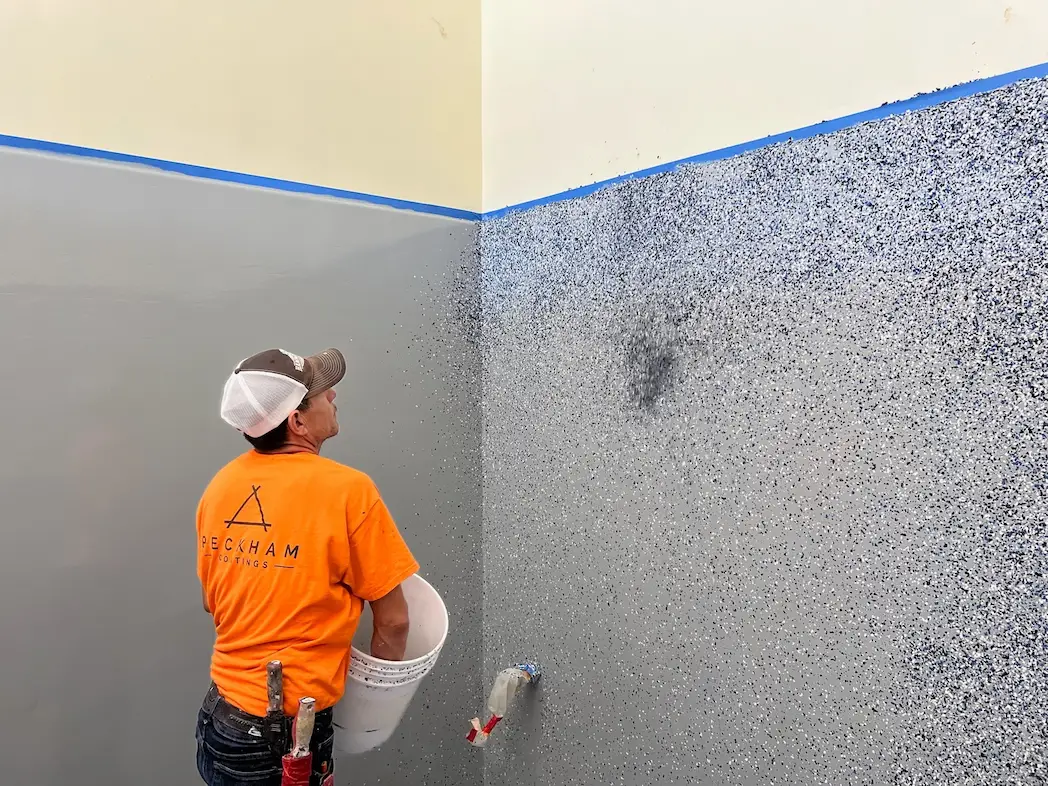
Epoxy wall coatings are two-component resin systems, chemically similar to epoxy flooring, applied directly over primed CMU, drywall, or concrete. Cured epoxy forms a seamless, nonporous membrane that resists most industrial chemicals, wipes down with standard sanitation protocols, and eliminates the seams where bacteria could otherwise collect.
Epoxy performs best in dry-to-moderate-moisture environments with chemical exposure: dry storage, packaging areas, mechanical rooms, and general industrial space. It's typically the lower-cost option relative to urethane cement and fiberglass systems, which makes it the default choice when a wall isn't facing constant washdown or major temperature swings.
Epoxy is also more rigid than urethane, so it holds up less well in areas with heavy thermal cycling or repeated impact — which is exactly where the next two systems take over.
Urethane and fiberglass-reinforced alternatives: when epoxy isn't the right call
Urethane wall coatings flex more than epoxy, which makes them the better fit for washdown areas, cold storage entries, and zones that see frequent hot-water or steam cleaning. The tradeoff is cost — urethane systems generally run higher per square foot than epoxy.
Fiberglass-reinforced wall panels take a different approach entirely. Instead of a liquid-applied membrane, they use rigid, impact-resistant panels installed over the substrate. That makes them the stronger choice for areas that take constant physical contact — loading docks, corridors used by pallet jacks, and processing rooms where equipment regularly strikes the wall.
The choice between epoxy, urethane, and fiberglass-reinforced panels comes down to three questions: how much moisture and temperature swing the wall sees, how much physical impact it takes, and what the facility's specific compliance requirement calls for.
Where wall coatings matter most: food processing, cleanrooms, and wastewater facilities
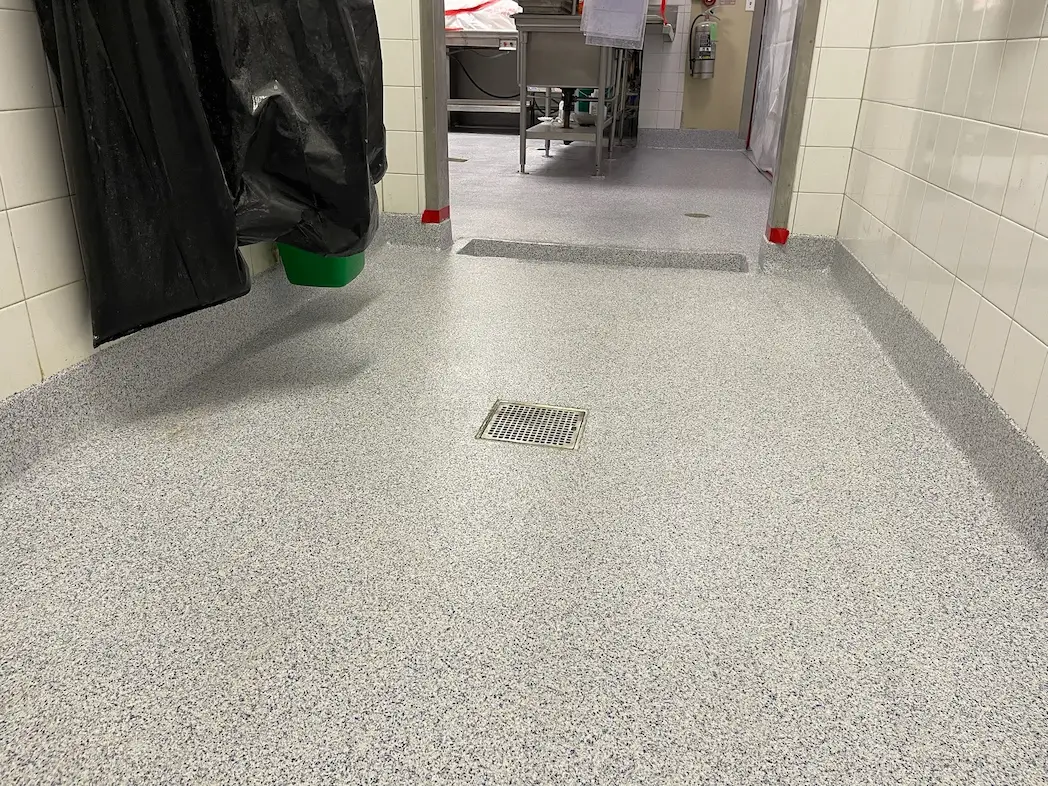
In food and beverage plants, wall finish is part of the audit, not a cosmetic decision. Both the FDA Food Code and USDA's sanitation performance standards treat wall material as a sanitation control, on the same level as floors and equipment — meaning the wrong wall finish can fail an inspection even when everything else checks out.
Aerospace, biotech, and electronics assembly facilities have a different concern: static control. Facilities running an ESD-protected area typically need wall and floor materials that support an electrostatic discharge control program built to the ESD Association's ANSI/ESD S20.20 standard. Wall finish becomes part of the same grounding and static-dissipation plan as the flooring.
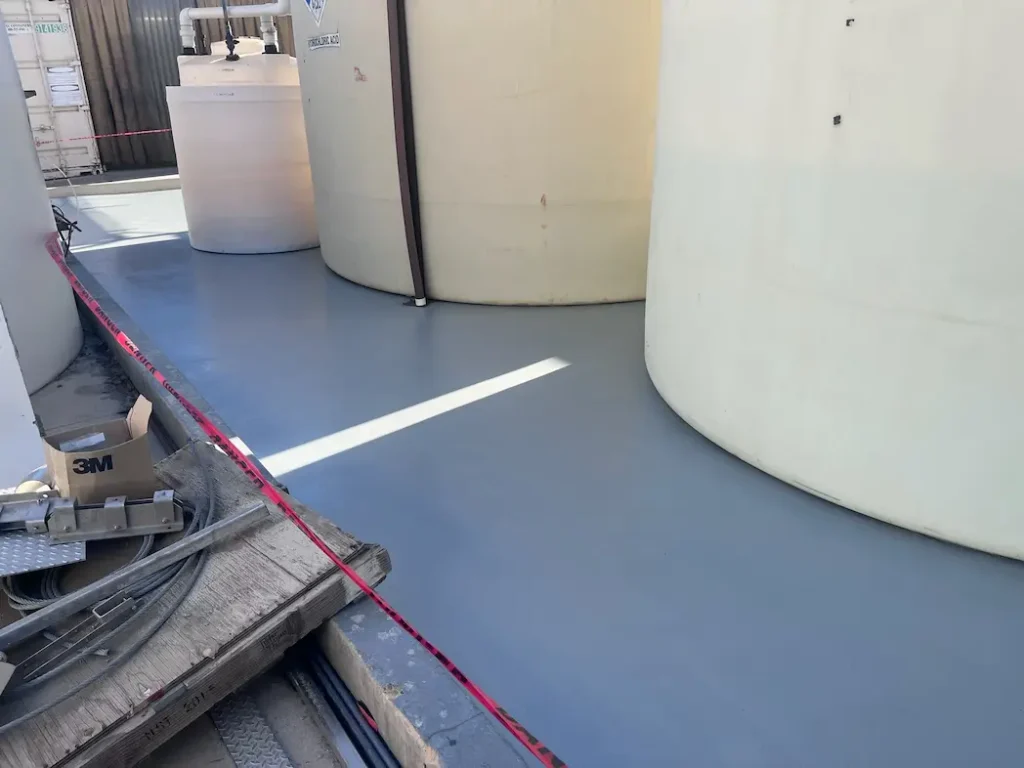
Wastewater and industrial-chemical facilities need something else again: chemical resistance strong enough to withstand corrosive vapors and direct exposure. The wrong wall system in a clarifier building or chemical storage room can degrade in months, not years.
Related systems and industries
Specifying and installing wall coatings without shutting down operations
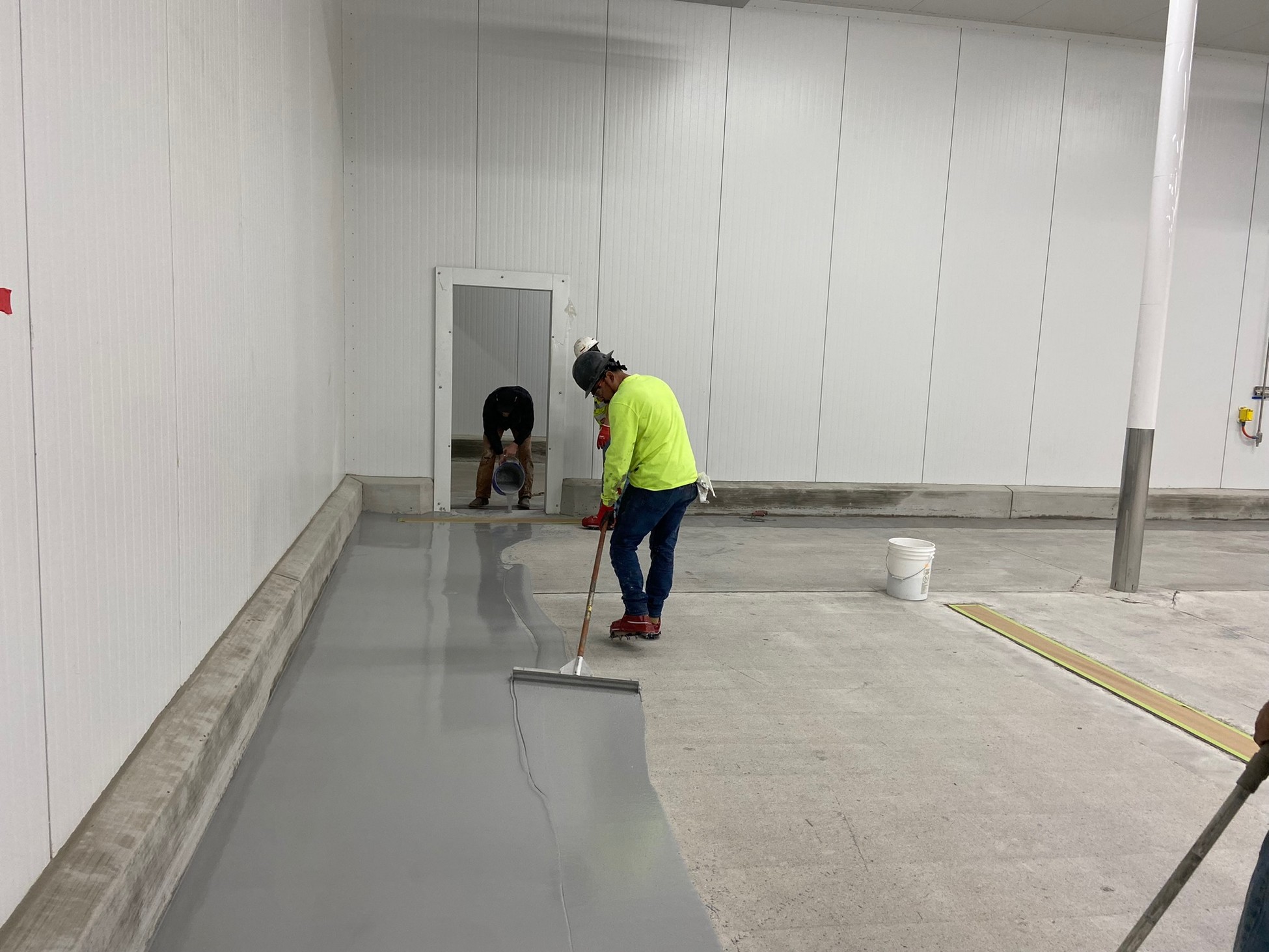
Wall coating installation doesn't have to take a facility offline the way a full floor replacement can. Work can usually be sequenced by zone, letting adjacent areas stay operational while crews handle one section at a time.
Surface prep drives the outcome more than the coating itself. CMU, drywall, and concrete each need different primer and repair steps before a coating system will bond and hold up long-term — a spec that skips substrate prep is the most common reason wall coatings fail early.
Matching the wall system to the floor system, the chemical exposure, and the compliance requirement up front avoids a spec that looks fine on paper and fails in the field.
Conclusion
A wall that's just painted is a liability waiting for the right combination of moisture, impact, or an inspector with a checklist. Epoxy, urethane, and fiberglass-reinforced systems each solve a different version of that problem, and the right one depends on what the wall actually has to survive — chemical exposure, washdown cycles, static control, or straight physical impact.
Peckham Coatings installs epoxy, urethane, and fiber-reinforced wall systems for food processing, cleanroom, wastewater, and industrial facilities across the Western U.S. Certified crews install to the same compliance standard as the flooring underneath, as part of a turnkey approach that covers floors, walls, and roofing under one contractor. Get in touch to talk through which wall system fits your facility's exposure and compliance needs.
FAQ
Are epoxy wall coatings USDA or FDA compliant?
They can be, when specified and installed correctly. The coating needs to create a smooth, nonabsorbent, easily cleanable surface, and for meat and poultry plants, meet USDA's moisture-impervious standard. Compliance comes down to the specific system and installation — not the material category alone.
How long do epoxy wall coatings last?
In dry-to-moderate exposure areas, epoxy wall systems typically hold up for well over a decade with routine sanitation. Constant washdown, steam cleaning, or heavy chemical exposure shortens that lifespan — usually the point where urethane or a fiberglass-reinforced panel system becomes the better fit.
What's the difference between epoxy and fiberglass-reinforced wall panels?
Epoxy is a liquid-applied membrane that cures into a seamless coating bonded to the wall. Fiberglass-reinforced panels are rigid sheets mechanically fastened over the substrate. Epoxy handles chemical and moisture exposure well; panel systems handle direct physical impact — forklift contact, pallet jacks, equipment strikes — better than a liquid coating can.
Can wall coatings be installed without shutting down the facility?
In most cases, yes. Work can usually be zoned and sequenced so only the section being worked on goes offline, letting the rest of the facility keep running. Timeline depends on ventilation, cure time for the specific system, and how the space is used.
Do wall coatings need to match the floor coating system?
Not necessarily the same material, but they need to handle the same exposure conditions and cleaning protocol. A washdown-rated urethane floor paired with a wall that can't handle the same water and chemical exposure shows up in maintenance costs — and in regulated facilities, in inspection findings.