A durable floor that also has to look intentional
Most epoxy flooring content is written for warehouses and food plants — chemical resistance, thermal shock, USDA compliance. Flake epoxy flooring solves a different problem: a facility that needs the same durability but also has to look intentional, because customers or visitors are standing on it.
That's the gap flake systems fill. A retail showroom, a lobby, or a light-industrial space that's open to the public needs a floor that holds up under daily traffic and cleaning without looking like a warehouse. Flake epoxy flooring gets there by broadcasting colored vinyl chips into a resin base, giving the floor texture and visual depth that a single-color epoxy pour can't match.
This guide covers how flake systems are built, where they perform best, how they compare to quartz epoxy, and what actually drives the cost.
What Flake Epoxy Flooring Is and How It's Built
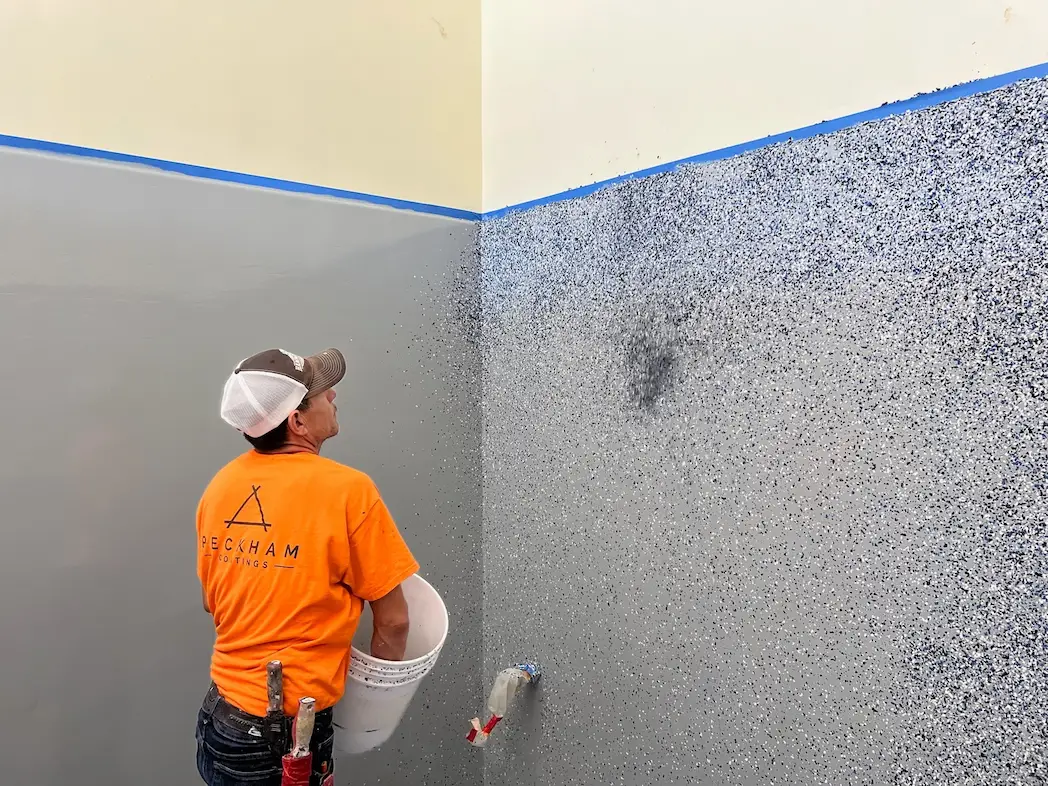
A flake system starts with the same base coat as standard epoxy flooring, but before it cures, colored vinyl or acrylic flake gets broadcast across the surface — either scattered for partial coverage or broadcast to full saturation for a solid decorative field. A clear topcoat then seals the flakes in and builds the wear layer.
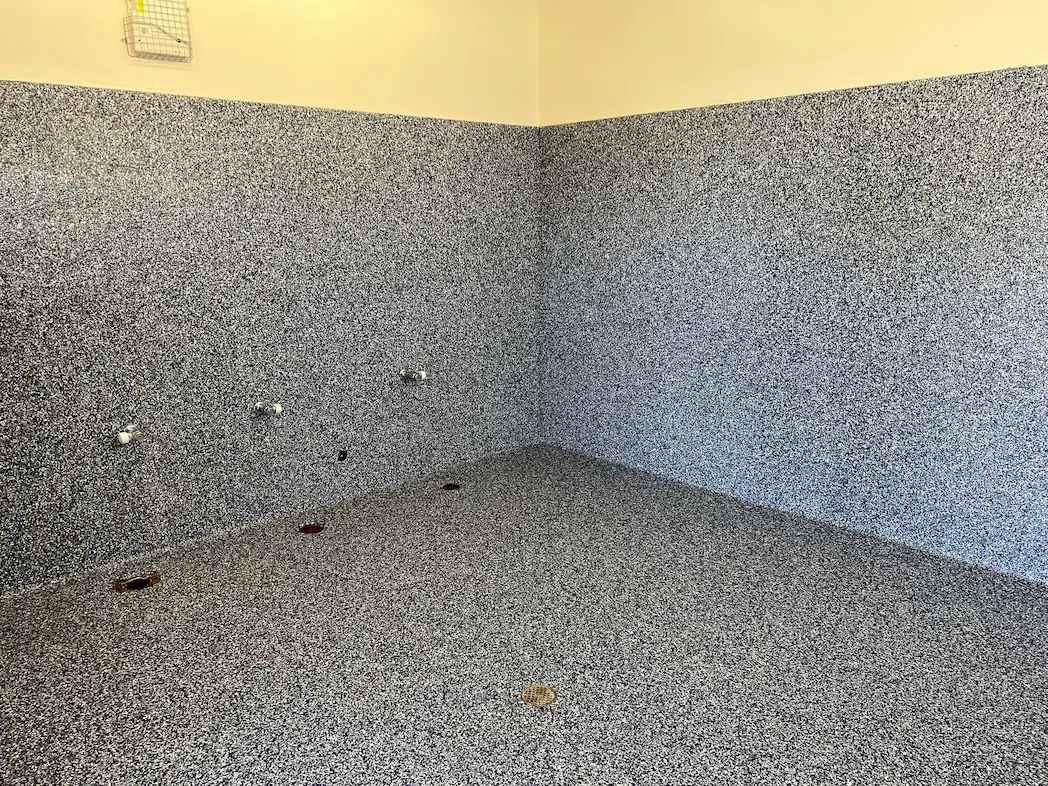
The flake density controls both the look and the cost. A light scatter costs less and shows more of the base coat color; a full broadcast covers the floor edge-to-edge in flake and costs more material and labor, but delivers a more uniform, higher-end finish.
Where Flake Epoxy Flooring Performs Best
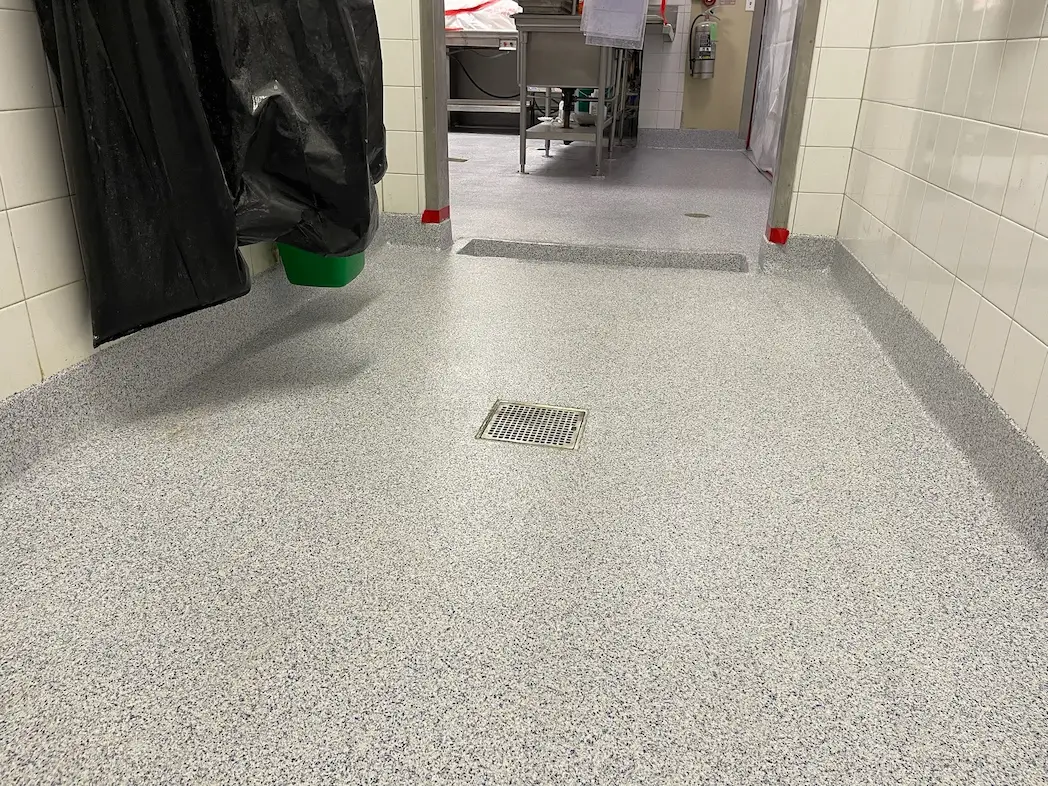
Flake systems work well anywhere a facility needs a durable floor that also functions as a design element: retail showrooms, auto dealership floors, gyms, office lobbies, and light-industrial spaces where customers or visitors are present. The decorative finish hides scuffs and minor wear better than a solid color, which matters in high-visibility, high-traffic areas.
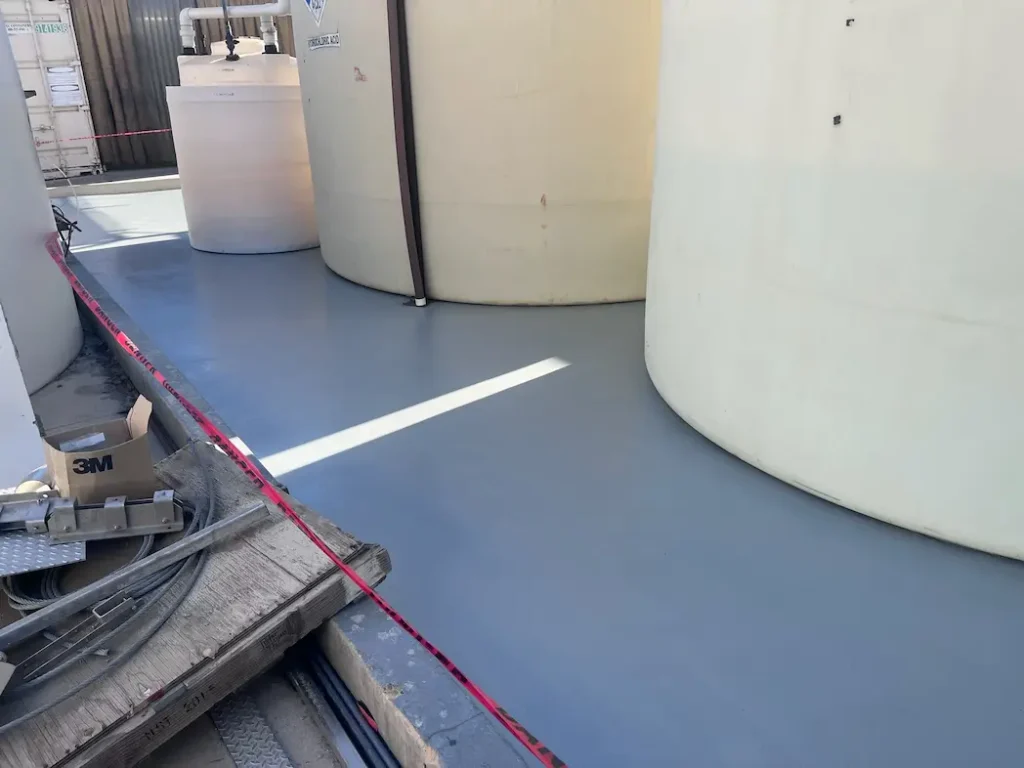
It's a poorer fit for heavy chemical exposure or extreme impact — food processing, aggressive washdown, or forklift-heavy warehouse zones are better served by the urethane cement or industrial epoxy systems built for that exposure instead.
Flake vs. Quartz Epoxy: Choosing a Decorative System
Flake and quartz epoxy solve a similar problem with different materials. Flake uses vinyl chips broadcast into resin, giving a lighter, more colorful, mottled look. Decorative quartz epoxy flooring uses colored quartz aggregate instead, producing a denser, more uniform, stone-like texture with slightly higher abrasion resistance.
The practical difference shows up mostly in look and budget: quartz systems generally cost more than flake and read as a more upscale, natural-stone aesthetic, while flake gives more color options and a lower cost per square foot for a similar level of durability. Both sit inside a wider family of builds — epoxy floor coating systems explained compares them against self-leveling, mortar, and urethane systems.
Slip Resistance and Durability in High-Traffic Retail Spaces
A decorative floor in a public-facing space still has to meet the same basic safety bar as any commercial floor. Slip resistance for hard-surface flooring is measured against a wet dynamic coefficient of friction of 0.42 or higher for level interior floors expected to get wet, and flake systems can be formulated with additional aggregate in the topcoat to meet that threshold in entryways, restrooms, and other wet-prone zones.
The clear topcoat is also what determines long-term durability — a thin, single-pass topcoat wears through to the flake layer faster than a properly built multi-coat system, which is where a lot of budget flake jobs fail early.
Installation Timeline and What Affects Cost
A flake epoxy floor typically installs faster than a full industrial system, since it doesn't require the heavier build thickness of urethane cement, but it still needs full cure time between the base coat, flake broadcast, and topcoat stages before the space can go back into service.
Cost drives on three factors: flake density, substrate condition, and square footage, since larger continuous pours are more efficient per square foot than small, cut-up spaces.
Conclusion
A flake epoxy floor gives a facility manager or retail owner the durability of an industrial coating without the industrial look. Peckham Coatings installs flake and quartz epoxy systems for retail, commercial, and light-industrial facilities across the Western U.S. Get in touch to talk through the right flake density and finish for your space.
Related systems and industries
FAQ
How long does flake epoxy flooring last?
In a retail showroom, lobby, or light-industrial space, a properly built flake system with a multi-coat clear topcoat typically holds up for a decade or more. Lifespan is driven mostly by topcoat thickness — a thin, single-pass topcoat wears through to the flake layer years earlier than a properly built one.
Is flake epoxy flooring slip resistant?
It can be. Slip resistance for hard-surface flooring is measured against a wet dynamic coefficient of friction of 0.42 or higher for level interior floors expected to get wet, and flake systems can be formulated with additional aggregate in the topcoat to meet that threshold in entryways, restrooms, and other wet-prone zones.
What's the difference between flake and quartz epoxy flooring?
Flake uses colored vinyl chips broadcast into resin, giving a lighter, more colorful, mottled look with more color options at a lower cost per square foot. Decorative quartz uses colored quartz aggregate, producing a denser, more uniform, stone-like texture with slightly higher abrasion resistance and a higher price.
How much does flake epoxy flooring cost?
Cost comes down to three factors: flake density, substrate condition, and square footage. A light scatter costs less than a full broadcast, damaged substrate adds prep, and larger continuous pours are more efficient per square foot than small, cut-up spaces.
How long does a flake epoxy floor take to install?
Flake systems install faster than a full industrial floor since they don't need the heavier build thickness of urethane cement, but the base coat, flake broadcast, and topcoat stages each need full cure time before the space goes back into service.